Congress targets Iran war funding
Democrats plan to use budget controls to pressure the administration on its $47.1 billion conflict with Iran.
By Sarah Reynolds ·
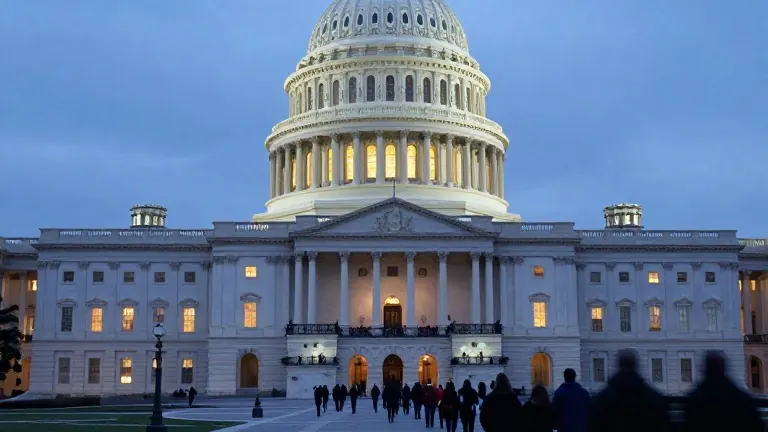
The cost of the war in Iran has become the central point of contention in Washington as the 119th Congress prepares to shift control to Democrats. The conflict has drained an estimated $47.1 billion from the federal budget since June 2025. This figure comes from Pentagon data obtained by The Associated Press. The financial toll sits alongside rising gas prices and tariff costs that voters cited in the midterms.
Polling data collected by SSRS for several news outlets shows deep dissatisfaction with the administration's approach. In a survey conducted around the election, 63% of respondents said the war was the wrong decision. A majority of voters, 51%, stated that U.S. support for Israel had been too strong. The war influenced the ballot box for 74% of voters, who listed it as a major factor in their choice. The economy remained the top concern, affecting 89% of those surveyed.
Anne Applebaum, a historian and staff writer at The Atlantic, argued that the new congressional leadership holds specific levers to alter the course of the conflict. She told NPR that Democrats can use their power over the federal budget to restrict funding for military operations. This tactic, known as the power of the purse, would limit the administration's ability to spend on the war. Applebaum expects this pressure to change the trajectory of the conflict sooner or later.
"I don't expect Trump to change," Applebaum said. "He's not that interested in what Americans think of his policies." She noted that the president can still veto legislation, meaning Congress cannot force policy changes through simple majorities. However, the new majority can control the flow of money and set the terms for future spending.
Timing remains a factor in the immediate outlook. Trita Parsi, an Iran expert at the Quincy Institute for Responsible Statecraft, warned that some supporters of the war may view the next two months as a window to escalate before the new Congress takes office. Iran remains wary of renewed attacks during this transition period. Lawmakers must act quickly to establish priorities before the administration can lock in further expenditures.
Beyond spending, Democrats plan to launch investigations into how the administration makes foreign policy decisions. Applebaum expects lawmakers to examine potential corruption involving people close to President Trump and his family. She raised questions about the competence of Defense Secretary Pete Hegseth and the advice the president received during the Iran war. These probes aim to bring information into public view, even if they do not immediately reverse policy.
The conflict in Ukraine also remains a focus for the new congressional majority. Applebaum anticipates that a bipartisan coalition will push for legislation requiring the president to reimpose sanctions on Russia. This approach relies on the high level of support for Ukraine that has persisted across party lines. The challenge lies in securing enough votes to override a potential presidential veto.
Questions about disruptions to Ukraine's satellite communications have already drawn attention. In October, the Pentagon's inspector general declined a bipartisan request to investigate slowdowns to Starlink and Starshield services. Ukrainian officials said these delays hampered their ability to intercept Russian drones. The Trump administration and SpaceX have provided conflicting accounts of who was responsible for the issues.
Applebaum expects lawmakers to dig deeper into these disruptions and the administration's negotiations with Russia and Ukraine. She noted that allegations of business dealings involving negotiators will likely become part of the public conversation. The new Congress aims to make these issues more open and subject to criticism.
The shift in control offers Democrats a chance to reshape the narrative around American foreign policy. They must move fast to define their investigative priorities. The administration retains the ability to block many legislative changes. The coming sessions will test the limits of congressional power against presidential authority.