Ferndale Council Reviews 2027 Budget Cost Sharing Method
Finance Director Danielle Ingham explained how the city allocates administrative costs across multiple funds and proposed a 1% property tax increase.
By Sarah Reynolds ·
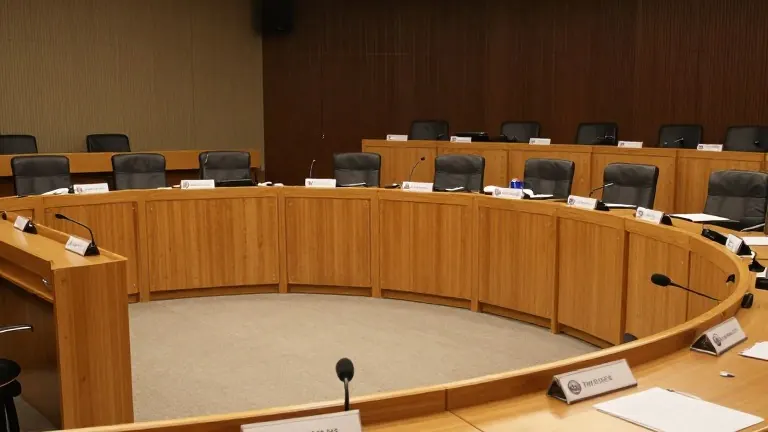
At the Ferndale City Council meeting on Oct. 19, Finance Director Danielle Ingham presented the framework for the city’s 2027 budget. The session focused on how administrative and operational expenses are distributed among different municipal funds.
Ingham detailed the cost allocation process for staff positions that support general government functions, including finance, human resources, and administration. While the current expense fund initially bills for these roles, other funds reimburse part or all of the costs. This method prevents the current expense fund from bearing the full financial burden of shared services.
The city uses measurable factors to determine fair shares among the water, sewer, stormwater, and current expense funds. These factors include staffing levels, building square footage, actual expenditures, financial activity, legal services, and elected officials. Specific roles, such as police officers, are paid entirely from the current expense fund, while utility billing staff are funded solely by the water, sewer, and stormwater funds.
Employees in shared roles, such as the finance director and public works staff, track their hours on time sheets to ensure accurate allocation. Ingham noted that public works employees provide detailed records of where their hours were used, allowing the city to distribute these costs confidently. Other departments, including accounts payable and legal services, break down costs by claims or tracked hours. Costs for the council and executive team are tracked by agenda items and reconciled against actual expenditures rather than budgeted figures. This approach resulted in a net reduction of nearly $80,000 from budgeted expenditures in 2025.
Mayor Greg Hansen and Ingham stated that this cost-sharing practice is standard for cities, ensuring that the funds where work is performed cover part of the associated wage and salary expenses. Ingham described the method as a way to achieve transparency, accuracy, budget sustainability, and accountability.
The council also reviewed property tax projections. Property tax is a core revenue source that can increase by 1% annually. If the city takes less than the maximum lawful levy in a given year, the difference becomes banked capacity for future use. The city currently holds approximately $1 million in banked capacity. For 2027, staff recommends approving the 1% increase, which would generate an estimated additional $21,700 in revenue.
A public hearing on the property tax increase is scheduled for Nov. 16. Following the hearing, the council will make a decision on the levy. Two additional budget workshops are planned before final approval. One workshop will examine the general fund and revenue options, while the other will focus on capital projects and utility funds.
Source: Lynden Tribune · original report published
More Politics · Bellingham news · Report a business · Got a Story?