Scott McNutt and the Federal Felony of Home Distilling
The Supreme Court will decide if a 158-year-old law that criminalizes hobby distillers violates the Constitution.
By Amina Yusuf ·
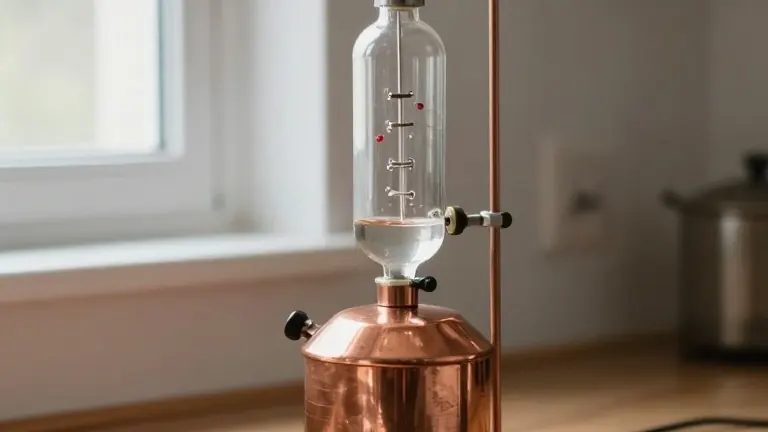
Scott McNutt owns a machine that separates volatile components from liquid mixtures. Under current federal law, he is a felon for possessing it. The Supreme Court agreed to hear a case that will determine whether Americans can distill spirits in their homes without facing criminal charges. The legal battle centers on a statute from 1868 that bans locating a distilled spirits plant in any dwelling place.
The federal penalty for violating this ban includes a fine of up to $10,000 and a prison sentence of five years. The U.S. Court of Appeals for the 5th Circuit ruled in April that the ban cannot be justified as an exercise of the federal government’s tax power. Judge Edith Jones wrote that the provision is an anti-revenue rule that prevents distilled spirits from coming into existence. She argued that the law reduces revenue instead of raising it, contrary to the Supreme Court’s 2012 explanation of how federal taxation works.
The government argues that the ban helps collect liquor taxes by stopping a form of production that is difficult to detect. It claims that threatening imprisonment is a necessary and proper safeguard against tax evasion. The Trump administration wants the Supreme Court to overturn the 5th Circuit’s decision. Jones countered that Congress cannot prohibit intrastate activity solely because it might produce products hard to tax. She warned that such logic would allow Congress to criminalize nearly any at-home conduct, including remote work and home-based businesses.
McNutt, a member of the Hobby Distillers Association, received a notice of potential civil and criminal liability from the Treasury Department in 2014. The department stated it had reason to believe he may have purchased a still capable of producing alcohol. The notice warned that federal law provides no exemptions for producing distilled spirits for personal or family use. It incorrectly stated the offense was punishable by a fine of up to $500,000, though the actual maximum fine is $10,000.
Another plaintiff in the case, Thomas Cowdrey, seeks to experiment in creating new beverage spirits. He has developed a recipe for apple pie vodka. McNutt’s lawyers say he uses his still to lawfully distill fuel alcohol and wants to tinker around with beverage spirits. The 5th Circuit found that the ban is inconsistent with how federal law treats wine and beer, which has long permitted home production for personal or family use.
Online retailers such as Amazon sell a wide variety of home stills. Many are explicitly advertised as appliances designed to produce vodka, gin, brandy, and whiskey. Customers might assume the activity is legal given the lack of a specific home distilling ban for other alcoholic beverages. The case raises a specific constitutional issue about the scope of federal tax power while exposing a policy that treats a common hobby as a crime.
The Supreme Court will decide if the 1868 law remains valid. The outcome will determine whether McNutt and Cowdrey are felons for acting on their desire to distill spirits at home. The court has not set a date for the decision.
Source: Chicago Sun-Times