Wildfire smoke exposure in schools jumps nearly eightfold since 2006
Oregon State University researchers found that average smoke days at public schools increased from 6.8 to 54.4, prompting calls for better indoor air filtration.
By Sarah Reynolds ·
Public school students in the United States now face an average of 54.4 days of unhealthy smoke exposure per year, up from 6.8 days in 2006. A study published in Environmental Research by researchers at Oregon State University’s College of Health documents this nearly eightfold increase over a 17-year period. The findings suggest that children are breathing unhealthy air for longer durations as wildfire seasons intensify.
The analysis tracked air quality data from 2006 through 2023. While the total number of annual wildfires has remained stable at approximately 70,000, the intensity of those fires has grown. In Oregon, wildfires burned 2.5 million acres this summer, surpassing the 2024 record of 1.9 million acres, according to the Oregon Department of Forestry. Childcare centers experienced a similar trend, with average smoke days rising from 9.4 to 112.2.
Molly Kile, an environmental epidemiologist and lead researcher at Oregon State, noted that fine particulate matter, specifically PM2.5, travels hundreds or thousands of miles. Prevailing winds blow from west to east, carrying smoke from western states across the country. This particulate matter can penetrate deep into the lungs and enter the bloodstream. Wildfires account for almost half of all PM2.5 in the United States, a primary driver of cardiovascular disease and respiratory illness.
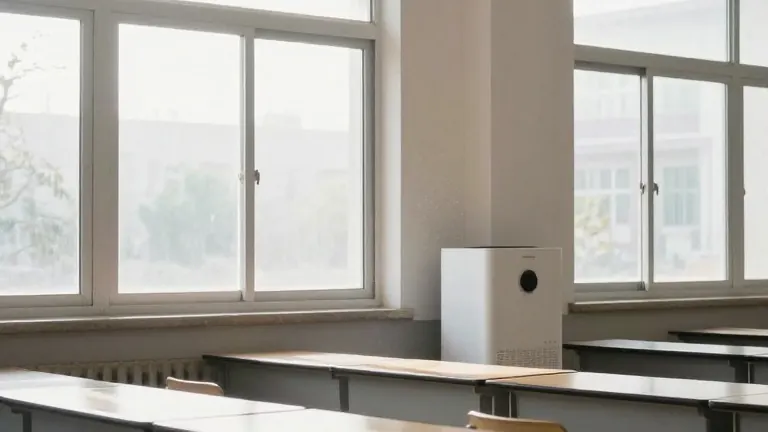
Kile warned that staying indoors does not automatically protect students. Indoor air quality varies based on building infrastructure. In some cases, schools recorded higher indoor PM2.5 concentrations than nearby outdoor areas during smoke events. This finding points to a need for targeted investment in HVAC upgrades or portable HEPA filters to manage indoor air quality.
Stephanie Foster, the corresponding author and a program manager at Samaritan Health Services’ Research Development Office, emphasized that educational facilities are high-occupancy environments where coordinated preparedness can reduce exposure. She identified air filtration, monitoring, and activity adjustments during smoke events as key mitigation strategies.
The study recommends that schools implement specific measures to protect youth. These include upgrading heating and ventilation systems or installing more affordable portable filtration units. As smoke events become more frequent and prolonged, these structural changes may be necessary to lower the health risks associated with long-term particulate matter exposure.
Source: Lake Oswego Review