Western researcher surveys 44 Whatcom County forests for DNR timber decisions
Graduate student Finley Bell is using ground data to help the state identify which legacy forests should be conserved or logged over the next decade.
By Sarah Reynolds ·
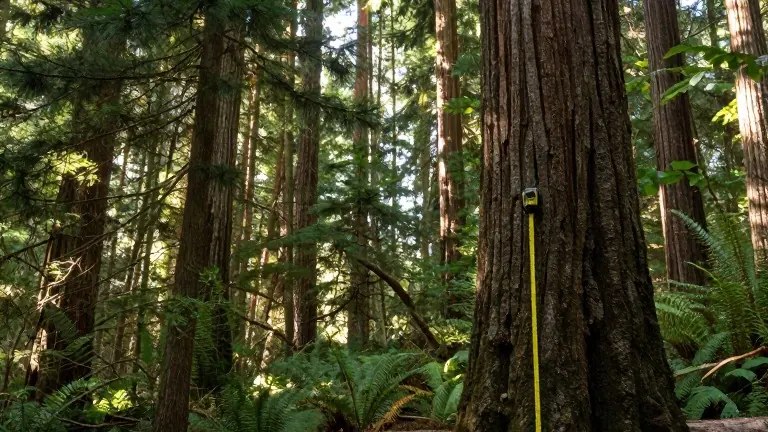
Finley Bell, a second-year environmental studies graduate student at Western Washington University, is conducting fieldwork in Olsen Creek State Forest to verify state land management data.
Bell is surveying 44 forest plots in Whatcom County that are managed by the Washington State Department of Natural Resources and are scheduled for timber sales within the next ten years. His goal is to distinguish between stands that are structurally complex and suitable for conservation and those that are better suited for harvesting.
The research responds to a 2025 DNR plan to identify structurally complex forests for ecological management. The agency initially targeted 77,000 acres for this purpose but adjusted the figure to 55,000 acres in September 2026. The plan aims to ensure that 10 to 15 percent of state forests reach mature or old-growth status within 70 to 100 years.
Bell uses DNR LiDAR data and satellite imagery to locate areas likely to contain mature forests. He then visits these sites to measure tree circumference, height, and species diversity. Aaron Dubbels, an undergraduate in environmental studies with a concentration in geographic information science, assists with data recording. The team also extracts tree cores for age analysis in the university's dendrochronology lab.
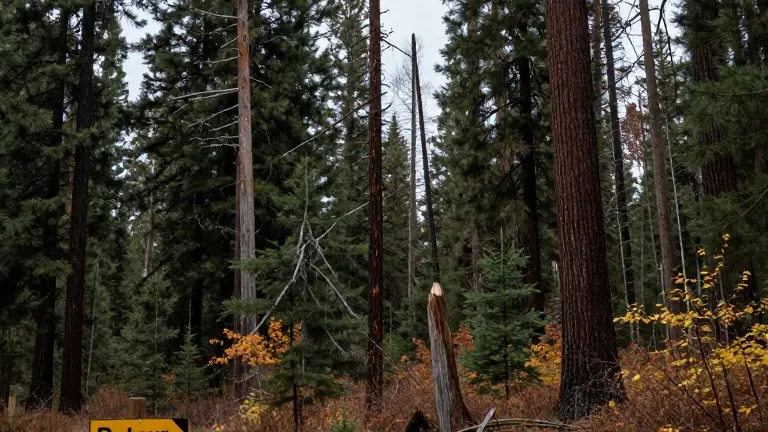
Many of these forests were selectively logged between the late 1800s and the mid-1900s. Because they were not replanted, they regenerated naturally. Bell notes that these areas often contain a mix of Douglas firs, cedars, and hemlocks, along with dense undergrowth and dead standing trees. He describes one plot in Olsen Creek State Forest as approaching old-growth characteristics, despite being scheduled for cutting in 2033.
Professor Aquila Flower, director of the Western Spatial Institute and Bell's faculty advisor, states that the research provides timely data for DNR planning. She said the agency has worked rapidly to collect data but still faces uncertainty regarding the location of complex forests. Flower noted that the project will inform scientifically based conservation plans for local DNR lands.
Bell calculated that Whatcom County contains more than 116,000 acres of DNR-managed land. He said that forests previously logged and replanted on 40 to 60-year cycles are often dense and uniform, making them suitable for timber sales. These stands typically feature fast-growing Douglas firs with little undergrowth. Bell said his findings will be shared with DNR, nonprofits, and the public to support balanced management decisions.
Source: Salish Current · original report published
More News · Bellingham news · Report a business · Got a Story?