WSDOT reveals plan for new US 2 trestle with HOV lanes
The proposed design includes three lanes in each direction, a bike path, and new off ramps into downtown Everett, with a potential cost of up to $4 billion.
By Sarah Reynolds ·
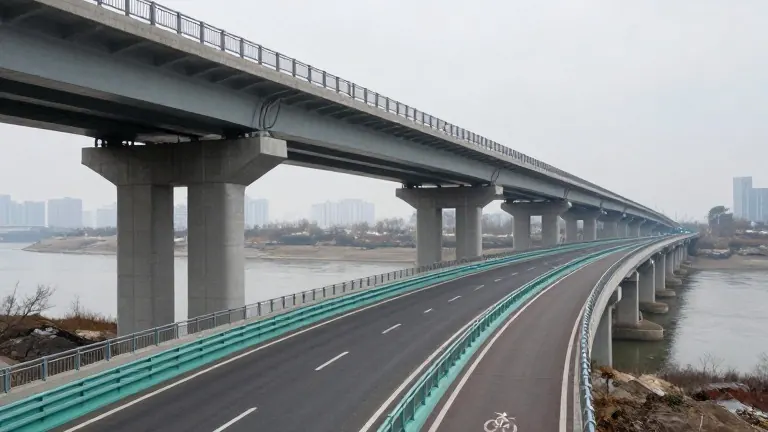
The Washington State Department of Transportation unveiled a preferred design for replacing the US 2 trestle on Wednesday during a state Senate committee meeting in Everett. The plan calls for three lanes in each direction across the bridge structure. One lane in each direction will serve as a High Occupancy Vehicle lane for transit vehicles and carpoolers.
The design includes full-width shoulders and a dedicated path for cyclists and pedestrians on the north side of the westbound highway. Cameron Kukes, an assistant regional administrator at WSDOT, said the plan also features three westbound off ramps into downtown Everett. These ramps will connect drivers to California Street, Everett Avenue, and Hewitt Avenue.
One of the new off ramps will include HOV lane access to Everett Station for transit users. Kukes noted that the ramps connecting the trestle to Interstate 5 will also be rebuilt with two lanes each to relieve traffic. New lanes will be added on the east side of the trestle between the structure and 20th Street Southeast, as well as onto US 2. Kukes stated that these connections to neighboring roadways provide the biggest benefit for drivers and transit users. He explained that increasing lanes on the trestle alone was not enough without addressing the surrounding network. “What we found was that it didn’t really matter how many lanes you put on the new trestle itself if you didn’t address the connections to the surrounding transportation network,” Kukes said.
The current trestle consists of a series of bridges connecting east Snohomish County to Everett and Interstate 5. WSDOT reports that the structure faces significant congestion during peak hours and risks instability in a major earthquake. The agency has spent years and millions of dollars studying replacement options. WSDOT will release its draft planning and environmental linkages study in December. The public will be able to comment on the design through January.
Allison Krutsinger, a director of external affairs at WSDOT, said the total cost of the upgrades could range between two and four billion dollars. She described these figures as “very, very preliminary.” Funding could come from federal, state, and local sources. The Legislature may also consider adding tolls to help pay for the project, though no decision has been made. WSDOT is also exploring a public-private partnership. Construction could begin in 2032 if sufficient funding is secured. The project faces a hurdle because the state must also fund a $14 billion bridge replacement over the Columbia River. Construction is expected to take six to ten years.
Ray Stephanson, the former Everett mayor and CEO of Economic Alliance Snohomish County, addressed the committee on Wednesday. He called the trestle fix a Puget Sound regional issue rather than just a local one. Cassie Franklin, the current Everett mayor, emphasized the need for proactive investment. “All of these people from all over the Puget Sound region come into Everett to build the world’s best airplanes,” Franklin said. “If we don’t proactively invest in this infrastructure now, the challenges are only going to get more expensive and more disruptive over time.”
Ric Ilgenfritz, head of Community Transit, spoke at the meeting about the transit benefits of the design. He said two-way HOV lanes would be “Critical to effective transit” in the corridor. Ilgenfritz told the committee that the potential for two-way transit functionality is exciting. He added that it releases the agency from constraints that limit its ability to grow service countywide. The agency will continue design work before construction can start.
More News · Marysville news · Report a business · Got a Story?