Chinese Clean Tech Exports Set to Cut Global Emissions by 450 Million Tons
Record shipments of solar, wind, and electric vehicles driven by the Iran war are projected to offset emissions equivalent to Brazil's annual output.
By Amina Yusuf ·
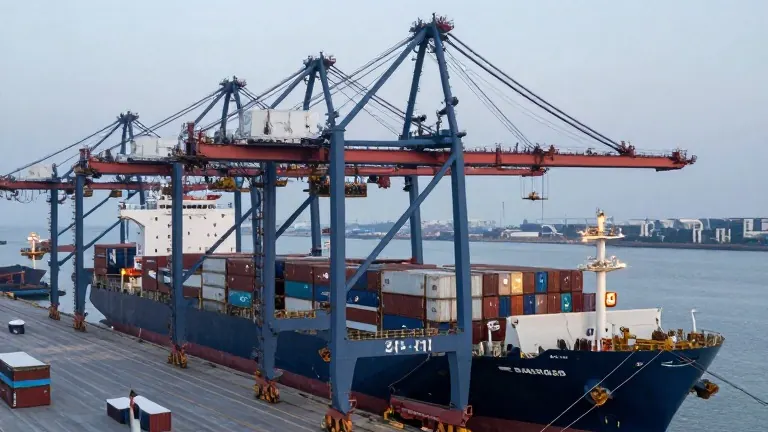
Global carbon dioxide levels will likely drop by approximately 450 million metric tons per year once China’s 2026 clean energy exports are fully installed. A new report indicates that this reduction is roughly equal to the total annual emissions of Brazil. The surge in exports is driven by heightened demand for renewables following the energy crisis caused by the Iran war.
The analysis comes from the Finland-based Centre for Research on Energy and Clean Air, which released its findings on Thursday. The organization tracked a 61 percent increase in electric vehicle exports and a 45 percent rise in wind turbine shipments during the first nine months of 2026. Battery exports grew by 39 percent, while overseas sales of solar equipment increased by 22 percent compared to the same period last year.
Southeast Asia emerged as a primary market for these goods. According to the independent energy think tank Ember, Chinese clean energy exports to the region jumped nearly 160 percent through September. Atlas Public Policy data shows that the value of Chinese electric vehicle exports reached $72.8 billion in the first nine months of this year, up from $39.7 billion in the prior year.
Lauri Myllyvirta of CREA described the current moment as a pivot point for global energy outlooks. He noted that clean energy growth is occurring at a pace faster than predictions made just a few years ago. If the current export trends continue through the end of 2026, the lifetime emissions avoided by this year's shipments would total approximately 8.4 billion metric tons. This amount represents about 24 percent of annual global emissions, exceeding the combined output of the United States and India.
Chinese clean technology exports to the United States rose 13 percent from January to September, despite higher tariffs imposed by President Donald Trump. Myllyvirta stated that demand was stronger than expected. The U.S. remains a key market even as China serves as both the world's largest supplier of clean equipment and its biggest source of carbon emissions.
The disruption to shipping through the Strait of Hormuz, a route for one-fifth of global oil and gas, has forced import-dependent Asian nations to seek alternatives. Countries in the region are implementing policies to reduce reliance on fossil fuels. Laos, Thailand, and Vietnam have introduced incentives for solar installations and electric vehicle purchases. The Philippines adopted similar measures and became the second-largest destination for Chinese solar exports in the first quarter of 2026.
Indonesia has pledged to install 100 gigawatts of solar power by 2029. Yu Sun Chin of Zero Carbon Analytics said that consumer interest in renewables is likely to persist beyond the current war. He pointed to the policy shifts in Southeast Asia as evidence of a changing approach to energy security, noting that every emission cut helps limit global temperature rises.
Source: WKMG-TV