WWU Engineering Building Earns Rare Double Sustainability Certification
Kaiser Borsari Hall became the first state-funded building in Washington to use performance-based ILFI standards in place of LEED.
By Sarah Reynolds ·
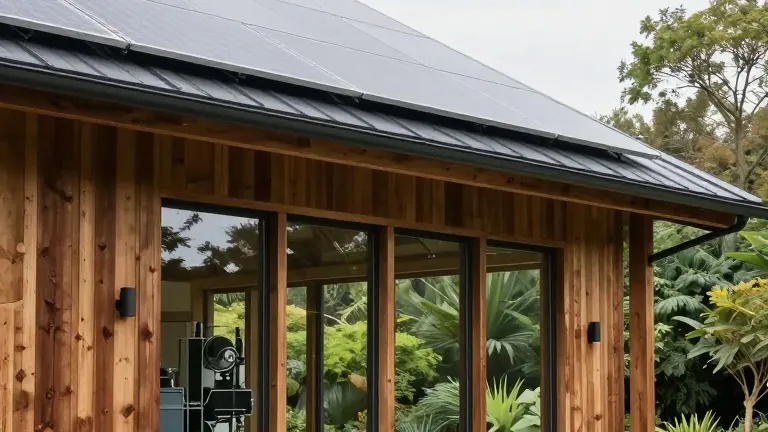
Kaiser Borsari Hall at Western Washington University officially received dual certification from the International Living Future Institute in August 2026. The building is now designated as both Zero Energy and Zero Carbon. This makes it the first higher education STEM facility in the United States to hold both titles at the same time. It is also the first state-funded building in Washington to use ILFI certification as an approved alternative to the LEED Silver standard required by state law.
The building opened for instruction in January 2025. It houses the Electrical and Computer Engineering department, Computer Science, and the Institute for Energy Studies. The project team targeted the ILFI standard early in the design process. They had to convince the state to accept performance-based certifications instead of the design-based LEED system used since 2005. The legislature approved the change, creating a precedent for other public agencies.
ILFI certification differs from LEED because it relies on measured performance rather than design intent. To earn Zero Energy status, the building had to prove that 100% of its annual energy use was offset by renewables over a 12-month period. To earn Zero Carbon status, it had to document reductions and offsets for the greenhouse gas emissions generated during material production and construction. A third-party audit verified the metered energy data.
The building’s physical structure contributes to its low carbon footprint. The mass timber frame sequestered enough carbon to reduce A1-A5 carbon impacts by 70%. The exposed timber and charred wood siding visually connect the interior to the neighboring arboretum. Large windows frame the natural environment, while the building’s mechanical systems are visible in labs and classrooms. This visibility invites students to participate in energy management.
High-performance features drive the building’s efficiency. A solar array covers more than 75% of the roof surface. An 82-kilowatt photovoltaic system generated over 83,000 kilowatt-hours in the first year. This offset up to 35% of electricity use during peak summer months. The building also uses a fully electric Variable Refrigerant Flow system and a dedicated heat recovery ventilation unit. These systems modulate to actual occupancy demand, reducing waste in unoccupied spaces.
In its first full year of operation, the building recorded a site Energy Use Intensity of 33.4 kBtu per square foot per year. This figure is more than 80% lower than what a comparable code-minimum laboratory building would typically consume. The low usage results from an airtight envelope with three inches of continuous mineral wool insulation and air-source heat pump water heating. Intelligent controls also harvest daylight to reduce the need for artificial lighting.
The interior spaces were designed to support various learning styles. The building includes a Learning Commons for Neurodiversity, flexible furniture, and gender-neutral ADA restrooms. Ground floor gathering spaces and a student-centered lobby encourage collaboration. An event space hosts industry partners for practical exploration. The facility is named for Fred Kaiser and Grace Borsari, who provided the lead gift alongside state and federal funds.
The project involved a collaborative effort between the Western project team, design firm Perkins&Will, and general contractor Mortenson. Perkins&Will director of regenerative design Devin Kleiner noted that the design considered clients without a seat at the table, including future students and the planet’s ecology. The dual certification confirms the building’s operational success. It now stands as a model for rigorous, performance-verified sustainability in public construction.
Source: Western Washington University News · original report published
More News · Bellingham news · Report a business · Got a Story?