
Clocks Fall Back Sunday as Senate Weighs End to Twice-Yearly Time Change
The House has approved permanent daylight saving time, but the Senate must act before year's end and sleep researchers back a different approach.
By Sarah Reynolds ·
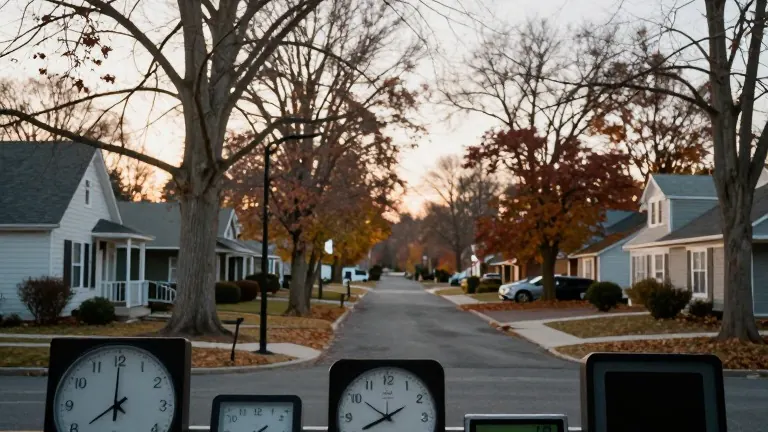
Daylight saving time ends Sunday morning, requiring most Americans to reset non-digital clocks by one hour, while legislation to end the practice for good awaits Senate action. Hawaii, most of Arizona and U.S. territories do not observe the change. Televisions, computers and smartphones will adjust on their own.
The Sunshine Protection Act cleared the House in July by a vote of 308 to 117 and would keep clocks set to daylight saving time permanently. President Donald Trump has said he backs that approach. Under it, clocks spring forward in March and stay there, leaving sunrise and sunset times unchanged through spring, summer and early fall. From early November through March, however, sunrises and sunsets would occur an hour later than they do under standard time. If the bill became law, sunrise in Indianapolis would fall after 9 a.m. around Christmas.
The Senate has until the end of the year to take up the measure before House approval expires. An AP-NORC poll conducted in 2025 found that 47% of Americans oppose changing clocks twice a year, 40% are neutral and 12% support the current system of setting clocks back in November and forward in March. The same poll found 56% prefer permanent daylight saving time to 44% for permanent standard time. Among people who describe themselves as morning people, standard time leads 50% to 49%.
Sleep researchers favor the other option. The American Academy of Sleep Medicine supports the Sunshine for Our Kids Act, which would also end the twice-yearly clock changes but lock in standard time instead. That would move sunrises and sunsets one hour earlier during the warmer months. The competing bills would therefore leave the country on opposite schedules.
Source: WTMJ-TV