Danfoss Fridges Frozen Across Europe
Malicious cyber-attackers remotely raised thermostat settings to 50C in supermarkets and blood storage facilities across seven countries.
By Amina Yusuf ·
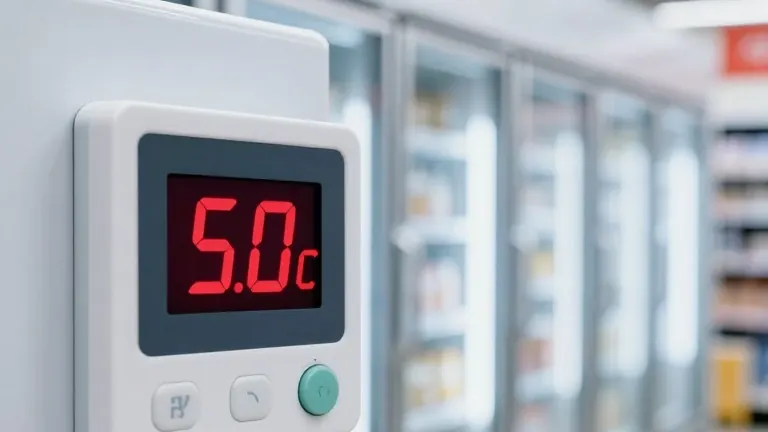
Remote attackers pushed thermostat settings on commercial refrigeration units to 50 degrees Celsius in seven European countries this week. The disruption affected supermarket freezers in Belgium, Sweden, and the United Kingdom, alongside critical cold storage facilities at France’s national blood service. The incidents represent a new vector for digital sabotage targeting physical infrastructure.
The primary technical target was the Danfoss control system. A cybersecurity researcher told the Guardian’s global technology editor, Dan Milmo, that attacks on dummy Danfoss units displayed characteristics typical of Russian-linked operations. Milmo noted that investigators generally consider two primary actors for such hacks: criminal gangs or nation-states. He also identified a tertiary category of "troublesome teenagers," citing the Scattered Spider group, two members of which were jailed in July for their Transport for London attack.
The cyber disruption coincided with a surge in aviation security measures. At least 25 commercial flights faced hoax bomb threats on Thursday, forcing emergency landings and diversions. This followed seven planes that were searched or diverted on Tuesday after similar malicious alerts. Aviation experts told the Guardian that airlines treated these threats as credible, suggesting a potential level of coordination despite no confirmed orchestration by a state or terror group.
Dan Sabbagh, the Guardian’s defence and security editor, described the current environment as a "grey zone" between routine peace and conventional military conflict. He noted that while Islamist terrorism has receded relative to hostile state threats, the nature of uncertainty has shifted. Conflicts in Ukraine and the Middle East are influencing threats closer to home, including a hybrid "shadow war" aimed at disrupting support for Ukraine through sabotage that falls below the threshold for military response.
Security agencies in the UK are monitoring these developments closely. MI5 currently tracks approximately 3,000 active subjects of interest. The Turing Institute is exploring ways to use artificial intelligence to secure critical infrastructure systems. Aisha Down, the Guardian’s global technology reporter, explained that many hacks exploit "edge devices." These are networked items with limited processing power, such as the unsecured printer that allowed North Korea to attempt a billion-dollar heist at the Bank of Bangladesh in 2016.
Finland, due to its proximity to Russia, is closely monitoring these cyber-tactics. Reports to its national cybersecurity centre have risen from 18,000 last year to 21,000 this year, a period when the country had a population of 6 million. This increase is partly attributed to a developing criminal hacking ecosystem with loose links to the Russian state. A European cybersecurity official noted that vulnerabilities exist in approximately 1,500 lines of code on average, making opportunistic attacks likely.
The psychological impact of these disruptions is a key component of the strategy. The UK government’s Be Ready initiative advises citizens to stockpile 72 hours of emergency supplies, including water and non-perishable food, to offset threats of hybrid warfare. Governments across Europe are issuing similar advice. A fruit and vegetable wholesaler near Heathrow, whose fridges failed on Monday, said the incident prompted him to add tinned goods to his weekend shopping list.
Sabbagh emphasized that the purpose of terrorism is to generate fear. He suggested that keeping calm is the first response to such threats. He acknowledged that while the threats are real, the message of stockpiling supplies can also serve a political purpose for governments seeking to increase defense spending. He noted that if a government is aiming to spend £10 billion more on defense by the end of the decade, encouraging citizens to keep extra water at home aligns with that broader objective.