Iran Executes 696 This Year as Trump Midterm Loss Fuels Internal Uncertainty
Pro-regime celebrations mask growing fear in Tehran that economic hardship and state repression will persist regardless of the outcome in Washington.
By Sarah Reynolds ·
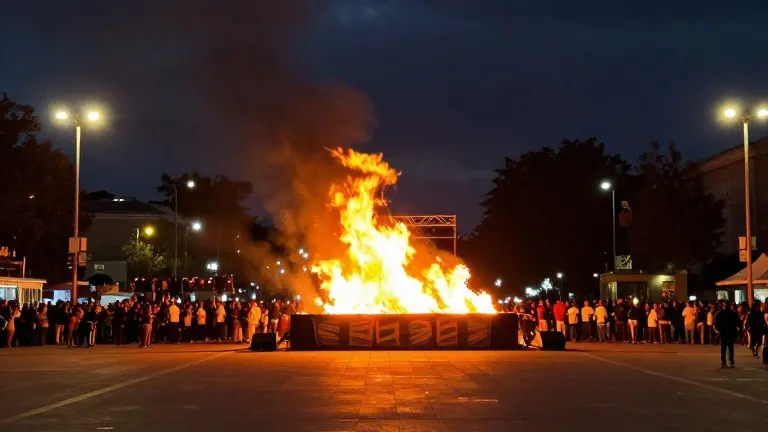
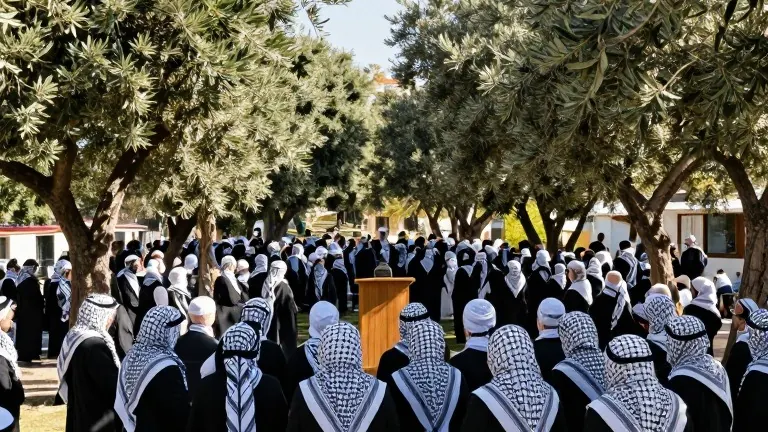
Pro-regime crowds in Tehran’s Enghelab Square burned a giant banner depicting Donald Trump, JD Vance, Steve Witkoff, and Benjamin Netanyahu hours after Republican midterm losses were confirmed. The display followed defiant statements from Iranian officials who framed the election results as a rejection of the US campaign against Iran. Mojtaba Khamenei, the current supreme leader, declared that the process of the US’s collapse has accelerated. His father, Ali Khamenei, was killed during strikes in February. State television broadcast a mock hanging of Trump in Tajrish Square, featuring an actor in an orange prison uniform and a mask of the president.
Inside the country, residents describe a mix of apprehension and confusion. The worsening economic situation has left many unsure what the US political setback means for their daily lives. Mehnaz, a journalist based in Tehran, characterized the current mood as hopeless. She said she is fearful but cannot pinpoint the specific source of that fear. She found it strange that people are focusing on the US and Israel in hopes of change. She noted that some believe Trump’s loss makes another full-scale war more likely because he does not need re-election.
Mehnaz pointed out that the regime executes people daily, and this trend is worsening regardless of the war. According to the Oslo-based NGO Iran Human Rights, Iranian authorities have executed at least 696 people this year. Alborz, a 36-year-old writer in Tehran, observed that the appearance of normalcy masks a precarious reality. He said people browse shops for clothes and goods, but actual purchases have become rare. A single T-shirt now costs what a full suit cost a year ago. He noted that passersby debate whether kerosene heaters are better than wood-burning ones as they prepare for potential infrastructure destruction. He called this resilience born of compulsion rather than nobility.
Alborz stated that people around him believe the likelihood of another full-scale war has decreased due to the election results and the situation in Israel. He added that no one is certain about the future. Noor, a 24-year-old resident of Karaj, said her fear has intensified after spending three weeks in prison following January protests. She described the repression mechanism as a well-oiled machine that works under clouds or bombs. She said uncertainty has become part of life in Iran. She stated that if someone inside the country predicts what will happen next, they are lying. Noor emphasized that the repression will not end.
Moein, a medic in central Iran, said the US and the West underestimated the Islamic Revolutionary Guard Corps. He admitted that he previously viewed the system as fossilized mullahs and corrupt military men. He now believes the IRGC is strategically competent and loyal despite its corruption. He described a bitter contradiction in a state that can endure decades of sanctions and confront the world’s most powerful military but turns its coercive machinery against its own population. He expressed shame that the state lasted half a century under sanctions only to kill young girls in the streets. Moein said he has fewer expectations of European leaders reacting to the continuing repression. Mehnaz said the pro-government celebrations are becoming more outrageous by the day. She noted that the IRGC has found hope for survival.
The next scheduled development involves continued monitoring of the economic impact and potential shifts in military strategy following the midterm results. No specific new diplomatic meetings were announced in the immediate aftermath of the election.