Harris County Election: Westside villages held GOP lead by six points
While Democrats took most of the county, a specific cluster of communities near the Katy Freeway remained a Republican stronghold due to housing stock and local representation.
By Matthew Collins ·
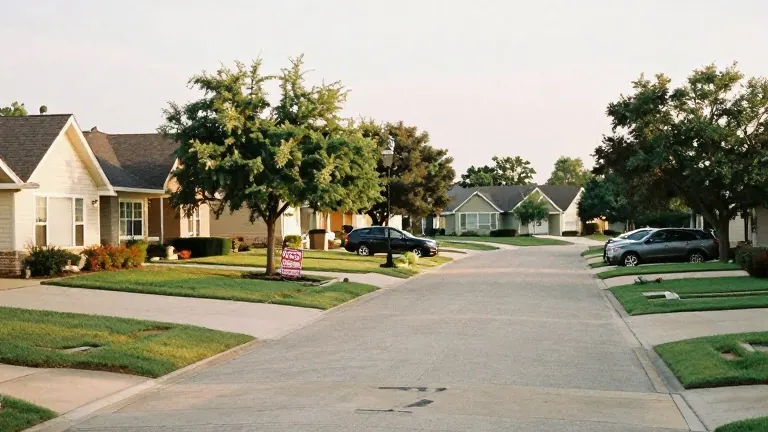
Voters in a narrow strip of west Harris County near the Katy Freeway delivered a decisive result for the Republican Party on Tuesday, defying the Democratic sweep across the rest of the region. County election data shows the GOP candidate leading by more than six points in that specific district, a margin that stood in sharp contrast to the surrounding areas.
In the U.S. Senate race, the majority of voters located inside the Beltway supported the Democratic candidate. The villages situated just south of the Katy Freeway broke from this pattern, registering as a distinct block of Republican support. One local voter described the visual result as a red island in a sea of blue.
Mark Jones, a political science professor at Rice University, attributed the divergence to the physical structure of the housing stock. He noted that other affluent parts of the county, such as River Oaks, feature higher home values but also a higher density of apartment residents. The villages in question, however, consist primarily of single-family homes. Jones argued that homeowners in these communities are highly sensitive to property taxes, which drives their favorable view of Republican candidates even when they disagree with other party policies.
Local residents cited personal values as a primary driver for their voting habits. Beth Payne, a voter living in the area, stated that the population is composed of hard-working individuals with strong values. She expressed disappointment in the broader county results but maintained hope for a future political shift. Payne suggested that the party could improve its performance by emphasizing the moral character of its candidates.
Jones cautioned against the Republican Party placing too much weight on this specific victory. He advised that the party should focus its analysis on the districts it lost to understand the causes of those defeats. He argued that winning a district that is structurally favorable should be the baseline expectation, not a primary point of satisfaction.
The six-point lead in the local representative race provided a concrete measure of the district's alignment. This margin secured the GOP candidate's position in a district where the housing profile and tax concerns created a stable voting bloc that resisted the county-wide trend.