Malkovich and Rockwell go to Easter Island in a new McDonagh film
Wild Horse Nine follows a dying CIA agent and his partner on a 1973 trip to Rapa Nui, just before the Chilean coup.
By Matthew Collins ·
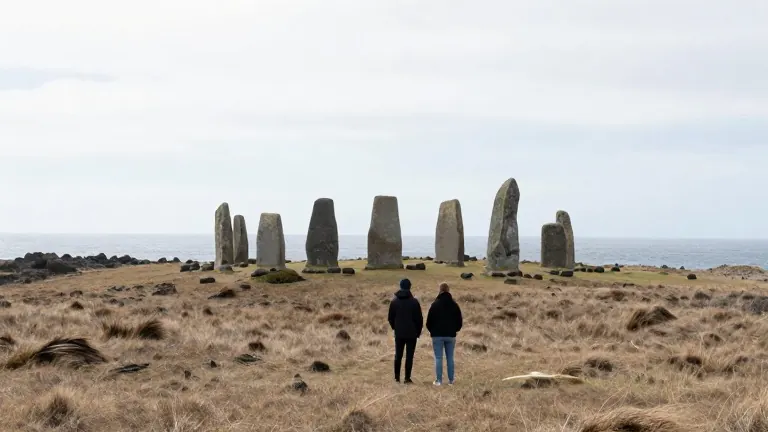
Martin McDonagh has moved his camera to Easter Island for his latest feature, Wild Horse Nine. The film stars John Malkovich and Sam Rockwell as two men spending a week on the remote island, which sits more than 2,000 miles off the coast of Chile.
The story opens in Santiago in 1973. Malkovich plays Chris Carlisle, a CIA operative who has spent years overthrowing democratic leaders in countries including Guatemala and Congo. He is about to participate in the coup that will depose President Salvador Allende and bring Augusto Pinochet to power.
Chris suffers from terminal cancer and early-onset dementia. He takes morphine regularly, which has made him loose with his tongue. While waiting for a flight, he tells two Chilean college students, "We came down here to destabilize your democracy, and it is going great."
Chris plans to die on the island. He asks his younger partner, Lee Chesterfield, played by Rockwell, to arrange a quick, painless death administered by a professional. Lee is attached to Chris and refuses to accept the plan. The CIA bureau chief for South America, played by Steve Buscemi, watches the pair closely because Chris is becoming a liability.
Lee also receives phone calls from his wife, played by Parker Posey. She is described as boozy and openly unfaithful, and her calls add to the tension during the trip.
McDonagh shapes the movie with the pacing of a comic Western. The dialogue moves slower than in his previous works, and there is little action until the final act. The characters spend much of the runtime arguing while exploring the landscape.
The film addresses the impact of American military intervention. One student corrects the men, noting they should call the place Rapa Nui, its Indigenous name. Chris laughs scornfully, a reaction that highlights his career of overturning governments without regard for local people.
The movie asks audiences to sympathize with a man who helped architect a dictatorship. It uses Chris's cancer diagnosis and moments of soul-searching to invite emotion. The film relies on bickering and wit rather than dramatic twists to drive the narrative forward.