New Film Puts CIA Operatives on Easter Island
Martin McDonagh’s latest movie stars John Malkovich and Sam Rockwell in a slow-paced drama set against the backdrop of the 1973 Chilean coup.
By Sarah Reynolds ·
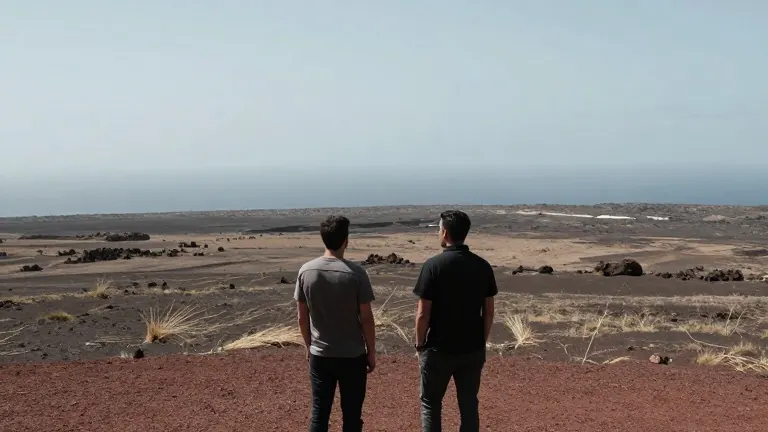
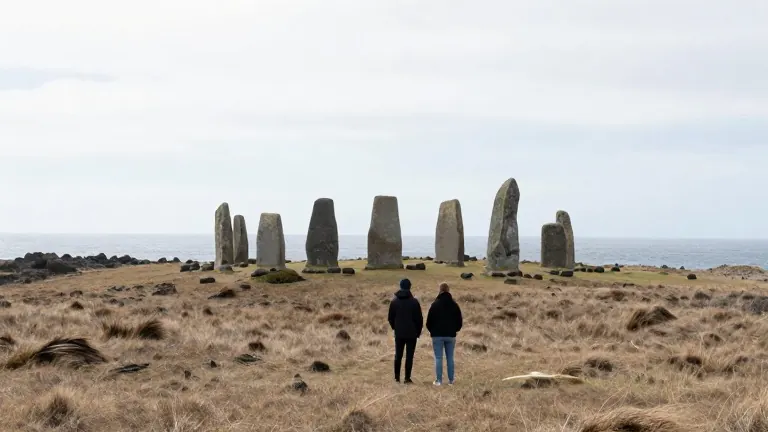
Moviegoers expecting the rapid-fire insults and graphic violence of Martin McDonagh’s previous works will find a different rhythm in his newest film, Wild Horse Nine. The movie, set in 1973, shifts the playwright’s usual focus to the remote island of Rapa Nui, known globally as Easter Island. It is a place more than 2,000 miles from the Chilean coast, and the setting dictates a slower, more drawn-out pace for the narrative.
The story centers on Chris Carlisle, a CIA operative played by John Malkovich, and his younger partner, Lee Chesterfield, played by Sam Rockwell. Chris has spent years orchestrating the downfall of democratically elected leaders across the globe, including in Guatemala and the Congo. In the film, he is preparing to replicate that process in Chile, just months before the military coup that installed Augusto Pinochet’s dictatorship.
Chris suffers from terminal cancer and early-onset dementia, conditions that loosen his tongue and complicate his mission. While waiting for a flight to Easter Island with Lee, he reveals the CIA’s plans to two Chilean college students. He tells them, "We came down here to destabilize your democracy, and it is going great." This slip of the tongue sets the tone for the film’s exploration of the personal costs of covert operations.
Chris announces a plan to die on Easter Island and asks Lee to arrange a quick, painless end administered by a professional. Lee, who cares for Chris, resists the plan. His difficulty managing the situation is compounded by constant phone calls from his unfaithful wife, played by Parker Posey, and oversight from the CIA’s South American bureau chief, played by Steve Buscemi. The trio’s interactions drive the plot, which resembles a comic Western in its structure.
The film challenges the traditional language of the location. One of the college students notes that the island should be called by its Indigenous name, Rapa Nui. Chris reacts with scornful laughter, a moment that highlights the tension between the operatives’ global ambitions and the local culture they are observing. The dialogue lacks the staccato rhythm of McDonagh’s earlier plays, relying instead on banter and bickering as the characters explore the island’s open landscapes.
Despite the serious geopolitical backdrop, the movie leans into sentimentality. It gives Chris a cancer diagnosis to create opportunities for soul-searching between punchlines. The film asks the audience to empathize with one of the architects of the Pinochet regime, a choice that some viewers may find difficult to accept. McDonagh uses the setting to examine the consequences of American military intervention through the lens of two men on what is ostensibly a vacation.
Wild Horse Nine marks a departure for McDonagh, who has previously set films in Belgium and the American Midwest. By placing his characters in one of the most remote locations on Earth, he creates a space where the weight of their actions feels isolated and amplified. The film runs on the tension between Chris’s impending death and Lee’s reluctance to help, all while the shadow of the Chilean political upheaval looms in the background.