US Weighs Iran Attack Amid Chemical Fears
New intelligence suggests Tehran may deploy chemical agents, complicating ongoing peace talks and military planning ahead of the midterm elections.
By Amina Yusuf ·
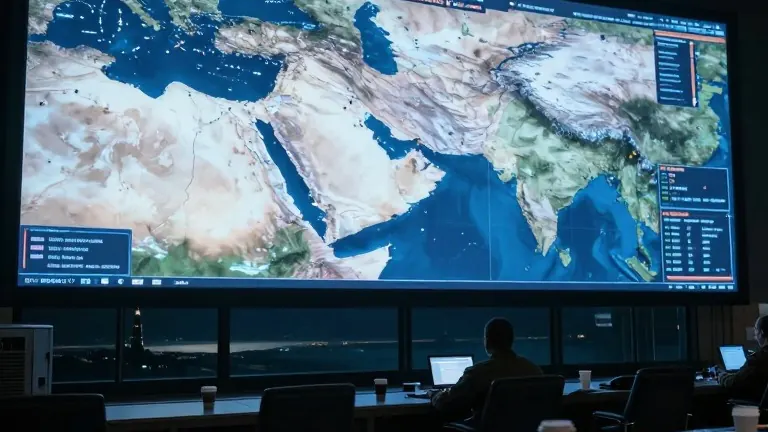
US military commanders have prepared a plan to strike Iran as early as Wednesday, days after the midterm elections.
The timing coincides with new intelligence shared by Israel with Washington and Gulf states. This data suggests Tehran is preparing to use chemical weapons against its adversaries.
Israeli officials argue that this chemical threat is more immediate than the nuclear risk that originally prompted the conflict. They told US counterparts that Iran is developing delivery systems, including missiles, or methods to smuggle agents into enemy territory.
Some US officials view these briefings as a strategy by Prime Minister Benjamin Netanyahu to push President Donald Trump toward renewed combat. However, Gulf countries described the Israeli assessments as lacking concrete evidence and called them 'unserious.'
Despite the skepticism, several officials are treating the warnings with gravity given Iran’s recent threats. The US Central Command has positioned three aircraft carriers in the region, taking advantage of moonless nights that provide darkness preferred for military operations.
The US launched defensive strikes late Monday evening. Trump confirmed the action on Fox News on Tuesday, describing the hit on an anti-aircraft facility as a 'minor attack' that went 'very nicely.'
These strikes occurred just hours after Trump signaled that a deal was possible. He posted on Truth Social that Iran wants a settlement 'as soon as possible.' This comes as US voters cast ballots in midterms heavily influenced by dissatisfaction with the war and resulting inflation.
Qatari mediators traveled to Tehran on Monday night to discuss a draft agreement. A senior Iranian official told Reuters that Tehran’s conditions must be met if the US wants the Strait of Hormuz reopened. The country has no set deadline for exchanging messages or reviewing responses.
Iran demands a permanent end to the war, including Israeli operations against Hamas and Hezbollah. Other requirements include lifting the US blockade, withdrawing US forces, removing sanctions, paying reparations, and recognizing new shipping arrangements in Hormuz set by Tehran.
Mohsen Rezaei, Iran’s Supreme National Security Secretary, said on X that Washington’s latest response 'was not convincing.' He insisted that the US must address Iran’s seven conditions explicitly before the strait reopens.
Chief negotiator Mohammad Bagher Ghalibaf stated the country is 'ready for battle with its finger on the trigger.' Deputy Foreign Minister Kazem Gharibabadi added that Iran retains the right to 'legitimate self-defense' following the recent strikes.
President Masoud Pezeshkian maintained that his government is still seeking resolution through dialogue. He noted that no one benefits if the war reignites and emphasized that the supreme leader recently granted the government new powers to negotiate previously off-limits issues. Egyptian Foreign Minister Badr Abdelatty called for flexibility and restraint in a phone call to Iranian Foreign Minister Abbas Araghchi.
Source: The Times of Israel