40 Houthi strikes on Saudi Arabia linked to Russian satellite surveillance
A new investigation finds Russian military satellites monitored target sites before and after every Houthi attack on Saudi Arabia this year.
By Matthew Collins ·
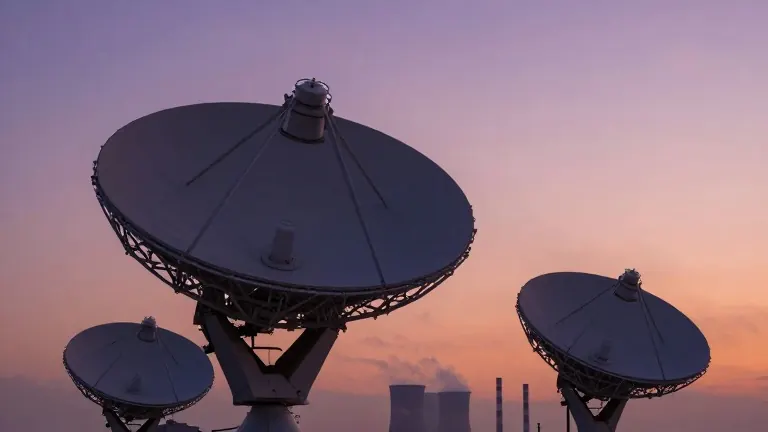
Russian military satellites monitored every one of 40 missile and drone attacks launched by Yemen’s Houthis against Saudi Arabia between July 1 and October 19, a new investigation found.
The study by AURORAH GeoSignal Intelligence, based in Geneva, identified a consistent pattern of Russian government and military satellite activity before and after each strike. The firm analyzed orbital trajectories and observation windows to correlate satellite passes with specific military targets in Saudi Arabia, Jordan, Bahrain, Kuwait, Qatar, the UAE, and Yemen.
Nawaf Obaid, the founder of AURORAH, stated that the key finding was the sequencing of these intelligence capabilities. He said Russian military geospatial and signals intelligence supported an Iranian-led architecture assisting Houthi operations. Obaid listed specific satellite types used, including Bars-M mapping satellites, Persona optical reconnaissance satellites, and Lotos-S1 electronic intelligence satellites.
The most precise example of this targeting involved the East-West pipeline in Saudi Arabia. In September, Houthi forces struck three pumping stations: PS8 at Afif, PS9 at Al-Dhekra, and PS11 at Al-Mesba’ah. These sites are located in the pipeline’s critical high-elevation western section. Obaid said the selection of these specific stations reflected a detailed understanding of the infrastructure’s engineering vulnerabilities.
Elijah Magnier, a Brussels-based military analyst, cautioned that the findings do not confirm how the intelligence reached the Houthis. He outlined four possible scenarios, including direct sharing by Russia, acquisition through commercial channels, or transfer through an intermediary. Magnier noted that the inability to intercept a transmission does not prove who had access to the data.
Obaid acknowledged the distinction between a general intelligence relationship and specific targeting data. He stated that attributing specific satellite-derived intelligence to individual missile launches requires additional corroboration. However, three officials, including one from Saudi Arabia and a senior Houthi, confirmed to The Associated Press that the Houthis and Iranian allies have benefited from Russian intelligence and Chinese capabilities.
Rayed Krimly, the Saudi deputy minister for public diplomacy, told reporters last week that the Houthis receive intelligence from Russia and China. He said Saudi Arabia discusses these matters regularly with both countries.
Houthi attacks have resulted in significant casualties and disruption in Saudi Arabia. A strike on King Khalid International Airport in Riyadh earlier this month killed at least 12 people and injured 300. The airport closed temporarily, forcing the postponement of Saudi Arabia’s flagship investment conference until 2027. Flights resumed on Sunday, though Houthi spokesperson Yahya Saree warned travelers to avoid the facility, calling it a military target.
An attack on King Fahd International Airport in Dammam on October 21 killed two people and wounded eight. Saree claimed recent attacks also hit the Ras Tanura oil refinery, an Aramco facility in Abqaiq, and a military headquarters in the Najran region. Independent corroboration of these specific claims is not yet available.
Ahmed Nagi, a senior analyst at the International Crisis Group, said Russian support marks a shift in the Yemeni conflict. He argued the war is moving beyond domestic dimensions as external actors provide intelligence and weaponry. Nagi noted that Russia has also taken positions at the United Nations Security Council opposing stronger international action against the Houthis.
Source: Al Jazeera