Bellingham voters secure state House wins as Democrats sweep Congress
Washington State House races in Whatcom County are settled with local Democrats holding their ground, while the national tide shifts control of both federal chambers to the opposition party.
By Amina Yusuf ·
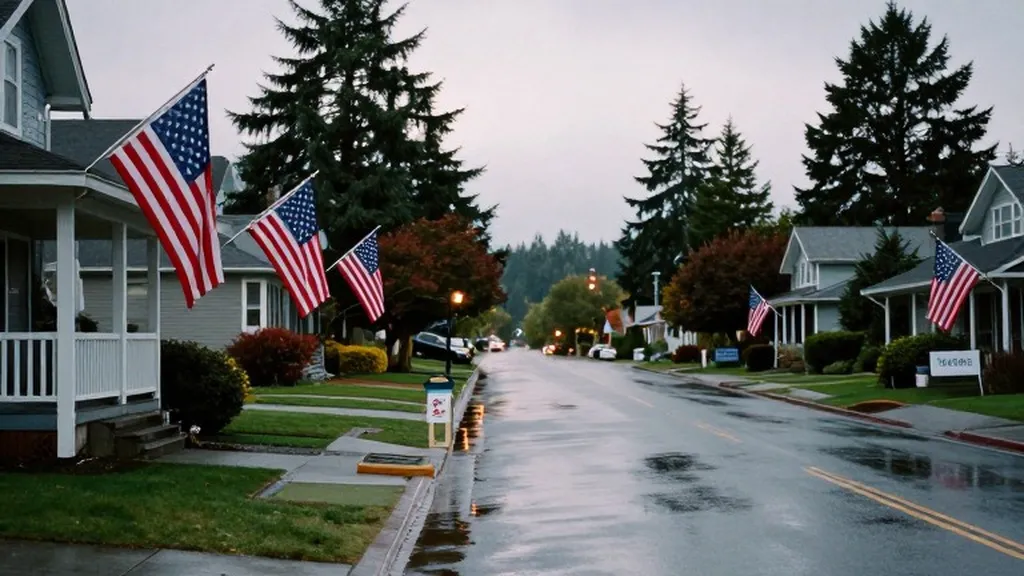
The political landscape in Bellingham, Marysville, and Lake Stevens has shifted dramatically following the general election held on Tuesday, November 3, 2026. As the final tallies from across Washington State came in, it became clear that the local electorate in Whatcom County had aligned with a broader national movement. Voters in the region participated in a complex ballot that included every U.S. House seat, state legislative races, and judicial contests. The outcome in the local districts reflects a strong preference for candidates who pledged to protect community services and address local infrastructure needs, a theme that resonated strongly in the suburbs and urban cores of the county.
At the state level, the results for the Washington State House and State Senate races were decisive. Democrats maintained their hold on the majority of seats in the state legislature, with key victories in the districts covering Bellingham and its immediate surroundings. The state’s election system, which relies heavily on mail ballots, ensured a high volume of participation that was counted over the following days. The final counts confirmed that the party in control of the state legislature would remain aligned with the new federal majority, creating a unified political front for Washington State residents heading into the next two years. This alignment is expected to streamline the process for passing state-level legislation that has been stalled by divided government in previous cycles.
Nationally, the election results marked a significant turning point for the federal government. Democrats won majorities in both the U.S. House of Representatives and the U.S. Senate. According to the final tallies reported by Ballotpedia, Democrats picked up at least 43 House seats, which were previously held by Republicans or an independent. This swing resulted in a projected House majority of at least 250 to 157. In the Senate, Democrats captured seven seats that had been held by Republicans, securing a majority of 54 to 44. This net loss of at least seven Senate seats for the Republican party places this election among the top 20 percent of election years in terms of seat swings against a sitting president’s party, a threshold often defined as a wave election.
The shift in power in Washington, D.C., has immediate implications for the residents of Bellingham and the rest of Washington State. With Democrats now controlling both chambers of Congress, the oversight powers of the new majority will be focused on several key areas, including education and federal funding. Rep. Bobby Scott of Virginia, who is set to take the helm of the House Committee on Education and the Workforce, has already signaled plans to use investigative powers to review the Trump administration’s dismantling of the U.S. Education Department. This is a priority for many local educators and parents in Whatcom County, who have watched federal policies impact school funding and administrative structures in recent years.
The new congressional majority also brings a renewed focus on the power of the purse. Sen. Chris Van Hollen of Maryland, a member of the Appropriations Committee, has stated that Democrats are exploring ways to use federal funding as leverage to rein in executive actions. This approach could affect federal grants and contracts that benefit local businesses and public works projects in Bellingham, Marysville, and Lake Stevens. The ability to attach conditions to spending bills provides the new Democratic leadership with a tool to establish guardrails against administrative decisions that have been unpopular with voters in the state and across the nation.
In the state of Washington, the election cycle also included races for the State Supreme Court and intermediate appellate courts. The results of these judicial contests will shape the legal landscape for the state for the next several years. With no governor or U.S. Senate election on the ballot this year, the focus of the local vote was squarely on the House and state legislative races. The absence of a gubernatorial race meant that the existing executive leadership in Olympia would continue to work with the newly elected legislature, a dynamic that will be closely watched by local government officials in Whatcom County.
The national narrative of the election was further complicated by high-profile developments in the White House. President Donald Trump addressed the nation regarding the FBI’s investigation into Nvidia CEO Jensen Huang’s personal life and the alleged involvement of a Chinese government agent. While this story dominated the national news cycle, it also highlighted the geopolitical stakes of the tech sector, a key employer in the Bellingham region. Trump suggested that Huang should not worry about the investigation, stating that he believed the CEO was in good shape. This intervention by the president in a counterintelligence matter drew attention to the close relationship between the executive branch and major technology companies that drive the local economy.
In response to the federal shift, local leaders in Bellingham began preparing for a new era of federal-state cooperation. The unified Democratic control of Congress and the state legislature in Washington offers a potential pathway for advancing policies related to housing, transportation, and environmental protection. These are issues that have been central to the political discourse in Whatcom County for years. The new congressional leadership has pledged to work with state and local officials to ensure that federal resources are directed toward these priorities, a move that could bring significant benefits to the communities along the coast and in the valleys of the county.
The election results also confirmed a trend in voter behavior that has been evident in recent cycles. Democrats won a plurality of state government trifectas and a majority of governorships nationally for the first time since before the 2010 elections. This broad coalition of state-level victories suggests that the national wave was not just a reaction to the federal government but also a reflection of local concerns. In Washington State, the alignment of local, state, and federal power under one party’s banner creates a unique opportunity for legislative progress that has been elusive in the past decade.