Washington House races flip as Democrats seize national majority
Voters in Bellingham, Marysville, and Lake Stevens contributed to a wave that gave Democrats at least 250 House seats nationally.
By Sarah Reynolds ·
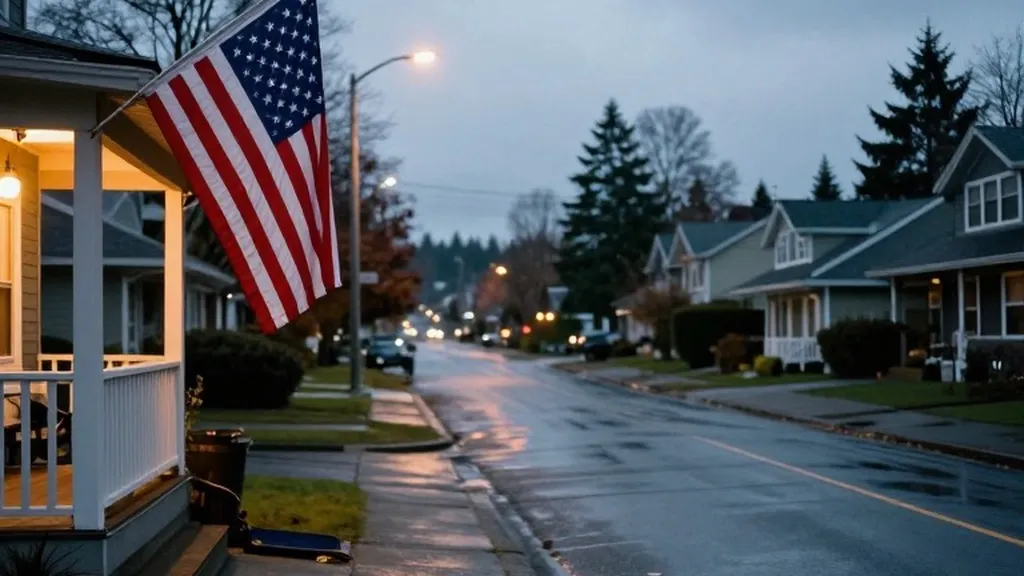
Residents in Bellingham, Marysville, and Lake Stevens completed their voting duties on Tuesday, November 3, as Washington conducted its general election. The state relies heavily on mail-in voting, a system that shapes the pace of results but ensures broad participation. Polls opened according to local schedules and closed at 8 p.m. on Election Day. Voters in Whatcom County and across the state chose candidates for every U.S. House seat, as well as state legislative and local offices.
The 2026 cycle marked a significant shift in Washington's congressional delegation. All state House seats were on the ballot, reflecting the full turnover typical of midterm elections. There was no election for U.S. Senate or governor this year, focusing attention squarely on the House races and state-level measures. The outcome in these districts contributes to the national tally of seats, which determined control of the federal chamber.
Nationally, the results signaled a decisive shift in power. Democrats secured majorities in both the U.S. House and the Senate. The party picked up at least 43 House seats, including 42 previously held by Republicans and one held by an independent. This gain gave Democrats a House majority of at least 250 to 157. The Senate race saw Democrats win seven seats, all previously held by Republicans, resulting in a 54 to 44 majority for the Democratic party.
The scale of the Republican loss in the Senate placed this election in the top 20 percent of historical years for seat swings against a president's party. Analysts define this threshold as a wave election. While the House loss of 42 seats fell short of the 48 needed for a similar wave classification, the overall trend was clear. Uncalled races could still alter the final totals, but the direction of the shift was evident by the time results were compiled.
This national realignment has immediate implications for legislative control. Democrats will now hold the gavel in both chambers of Congress starting in January. House Democratic Leader Hakeem Jeffries expressed support for new initiatives, including an impeachment resolution for Defense Secretary Pete Hegseth. The resolution, introduced by Rep. Thomas Massie, focuses on military actions in Iran, Yemen, and Venezuela. A vote on the measure could occur by mid-week, though the process remains complex given the transition period.
In the House, the new Democratic majority will take control of key committees. Rep. Bobby Scott of Virginia, the top Democrat on the Education and Workforce Committee, stated he plans to leave no rock unturned in investigating the Trump administration's dismantling of the U.S. Education Department. He aims to use subpoena powers and hearings to review federal student loans and anti-discrimination policies. This investigative push is expected to begin shortly after the new Congress convenes.
Democrats are also preparing to use appropriations powers to check executive actions. Sen. Chris Van Hollen of Maryland said there will be an interest in using the power of the purse to establish guard rails against abusive practices. The party aims to add conditions to spending bills to rein in the administration's education agenda. While legislative countermeasures may be limited by potential vetoes, funding conditions offer a different avenue for influence. Advocates hope to use these tools to prevent further damage to federal agencies.
The election results also reflected changes in state governments. Democrats won a plurality of state government trifectas and a majority of governorships for the first time since before the 2010 elections. Trifecta status was decided in 44 of the 46 states by 4 p.m. on November 6. This broad sweep suggests a coordinated voter preference for Democratic leadership across federal and state levels. The shift aligns with the national trend of challenging the incumbent party's agenda.
In California, the election highlighted the influence of Catholic voters. Xavier Becerra, a Democrat, won the governor's race, becoming the state's first elected Latino governor. He is the fifth consecutive Catholic governor in California, a streak that underscores the faith's deep roots in the state. About 6 in 10 Catholic voters supported Becerra, while 4 in 10 voted for his Republican opponent, Steve Hilton. Latino Catholics showed stronger support for Becerra, with about 7 in 10 voting for him, while white Catholics were split.
The religious dynamics in the election are complex. David Gibson, director of Fordham University's Center on Religion and Culture, noted that there is no single Catholic vote. Catholics are politically diverse, with voting patterns varying by ethnicity and region. In California, the state's large Catholic population influenced the outcome, but their votes were not uniform. This diversity reflects a broader national trend where religious affiliation no longer guarantees a predictable political outcome.
The new Congress will face significant tasks as it prepares to convene. Democrats will control the agenda in both chambers, with a focus on oversight and legislative checks on the executive branch. The transition period includes immediate actions such as the impeachment vote in the House and the start of committee investigations. These moves set the tone for the next two years of federal governance. The results in Washington and across the nation indicate a mandate for change in how Congress operates.