Expert Warns of Maple-Killing Fungus in Wet Soils
A gardening columnist details how poorly drained soils can invite a fungus that has no known cure.
By Sarah Reynolds ·
Bellingham gardeners looking to add Japanese maples to their yards should test their soil first, according to a gardening columnist published Wednesday. The warning concerns drainage and a fungal pathogen common in the region's wet soils.
Drainage is the primary concern when planting Japanese maples, the columnist wrote. Planting above clay or in soil that does not drain sufficiently can lead to Verticillium Wilt, a fungus that lives in the groundwater. During wetter winter months, the groundwater rises and mixes with the tree's root system, allowing the fungus to infect it.
There is no cure for the disease. A soil sample can be sent to an analytical lab to test for the presence of the fungi. The columnist also recommended watching trees carefully in spring as they leaf out, since the disease typically infects one section or branch before moving to another. An infected limb will appear wilted in early spring. Pruning tools should be sterilized before moving to another tree. A cross section of a dead limb, at least 1 to 2 inches in caliper, will show a blackish bullseye pattern in the tissue, indicating the vascular system has been infected.
The columnist recounted losing two Coral Bark Maples in an Everett yard to the fungus before replacing them with a dogwood, which has thrived for some 20 years.
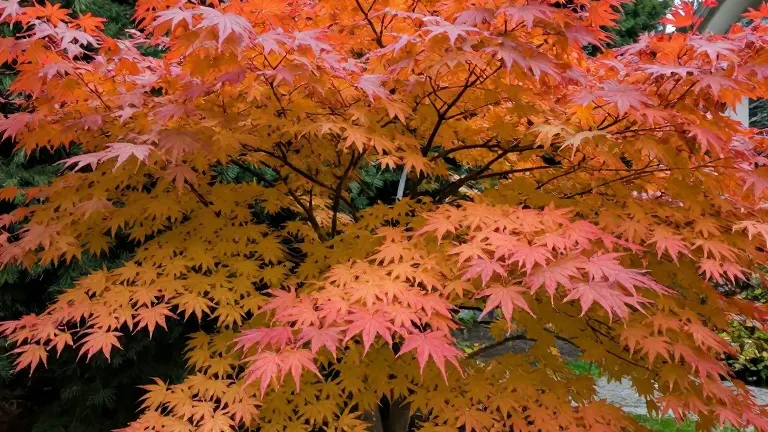
The column then turned to cultivars from Iseli Nursery, a wholesale grower in Oregon. The Pacific Rim Collection includes several varieties. 'Wabi Sabi' is a weeping lace leaf variety with green foliage, bright red seeds, and fall colors of gold, orange, and red, reaching about 7 feet tall and 10 feet wide. 'Origami' is a dwarf grower with a rounded globe shape, reaching about 8 feet tall and wide, with foliage that turns orange to yellow in autumn.
Larger varieties include 'First Flame,' a faster grower reaching about 20 feet tall and 15 feet wide, with spring foliage described as a flaming orangey-red. 'Final Fire' reaches similar dimensions and shows pastel spring foliage of yellow, light green, and pink hints, transitioning to green in summer and then orange, wine, and fire engine red in autumn. 'Cascadia' is a lace leaf type with a bushier form that does not weep, reaching 7 feet tall and 10 feet wide, with leaves that turn golden-orange in fall.
Local garden centers continue to have a selection of these maples, even as they go dormant for winter. Planting remains ideal at this time of year, allowing new plants to establish before spring.
Source: Everett Herald · original report published
More News · Marysville news · Report a business · Got a Story?