FDA Staffers Push Back Against New Peptide Drug Guidance
Internal opposition grew after the Health Department shifted its strategy to avoid a direct clash with agency scientists over unproven injectable compounds.
By Sarah Reynolds ·
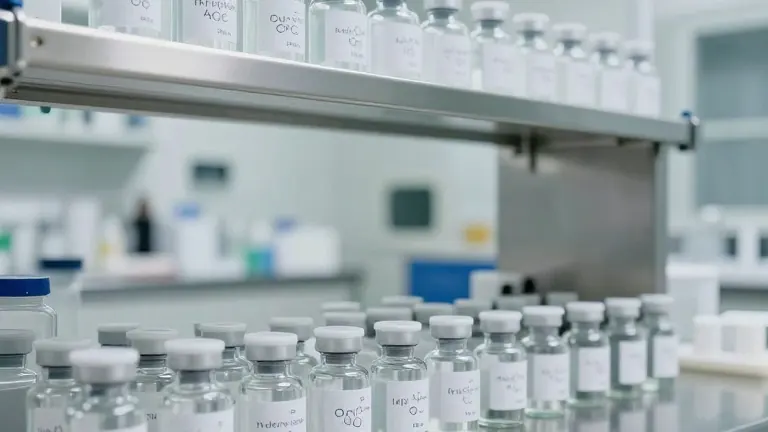
Scientific staff at the Food and Drug Administration largely opposed a draft policy that would make it easier for patients to access unproven peptide drugs. The guidance, which favors a plan supported by Health Secretary Robert F. Kennedy Jr., recently completed regulatory review at the White House. According to six people familiar with the process, the document is now positioned as the final step before official publication.
The proposal addresses injectable peptides that have become popular in the wellness sector. Without this new rule, these substances technically remain illegal drugs because they have not passed the agency’s standard review for safety and effectiveness. Three sources indicated the guidance would instruct the FDA to refrain from taking action against specialty pharmacies that sell these specific compounds. This approach allows pharmacies to operate without facing immediate enforcement.
Sources spoke on condition of anonymity to discuss confidential government deliberations. A spokesperson for the Department of Health and Human Services did not immediately respond to requests for comment. The policy marks a departure from the department’s initial strategy. HHS officials originally sought a formal regulation that would add compounds like BPC-157 and TB-500 to a list of safe substances for compounding pharmacies.
FDA officials warned that their scientists had major safety concerns and would not support a rule deeming these peptides safe. In response, HHS shifted to a non-enforcement directive. This change avoids a direct conflict with FDA staff while still achieving the desired outcome. Kennedy has described himself as a big fan of peptides and recently stated he used BPC-157 to treat a muscle injury.
The substances covered by the policy have not undergone full vetting. They include BPC-157 and TB-500, which are promoted for healing injuries and building muscle. International sports authorities classify these substances as doping agents. While some peptides occur naturally in the body to trigger hormones for growth and metabolism, the specific drugs targeted by this policy lack that official validation.
FDA staffers provided technical assistance on the final plan, including safeguards to improve safety. Pharmacies would be required to source ingredients from FDA-regulated factories and verify the chemical identity of the peptides. They must also collect side effect data for safety analysis. The Alliance for Pharmacy Compounding, an industry group that met with White House officials recently, supports these measures.
Kennedy has argued that U.S. compounding pharmacies must sell peptides to stop Americans from buying gray market products imported from China. Many consumers currently order vials online from Chinese manufacturers, which often label them for research use only to bypass U.S. rules. In 2023, the FDA added more than a dozen peptides to its list of substances that should not be compounded due to risks of allergic reactions, kidney damage, and tumor growth. At a July meeting, FDA staffers reiterated that more than half a dozen peptides remained unproven for safety and effectiveness.
Source: ABC News
More News · National news · Report a business · Got a Story?