Khan unveils 1.2-mile car-free stretch of Oxford Street
Buses are diverted to side roads as the first phase of pedestrianisation takes effect ahead of the Christmas shopping season.
By Sarah Reynolds ·
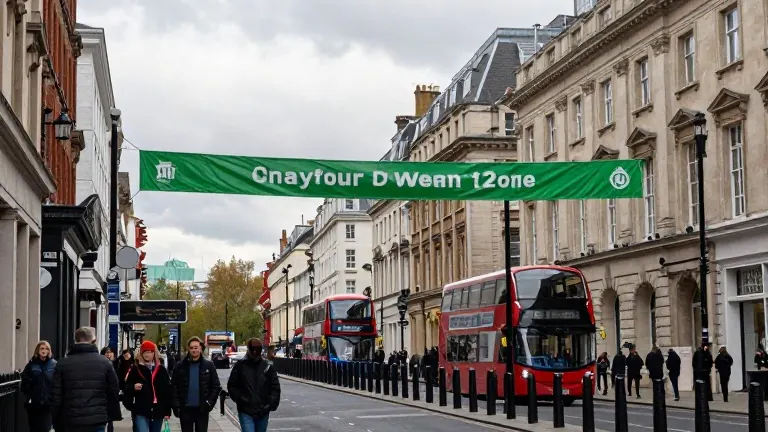
Shoppers on Oxford Street no longer have to dodge double-decker buses, taxis, and e-scooters to reach their destinations. Starting Monday, nearly a kilometre of the famous retail corridor is closed to all vehicle traffic, a change that forces commuters to walk or use public transit on nearby routes. The closure spans roughly from Oxford Circus station to Marble Arch, effectively splitting the 1.2-mile street in half.
For many visitors, the immediate result is more physical space. Daniel Te, who moved to London from the US in July, noted that he previously avoided the street because it was too busy. With the vehicles gone, he said he is now more inclined to visit. Te, a former city planner, sketched the scene on a Monday morning, observing that while most people still walked on the pavement, the atmosphere had shifted to resemble the scramble crossing at Oxford Circus.
Sadiq Khan, the London mayor, described the day as momentous in a speech at John Lewis. Khan, who started his career in retail on the street, argued that the closure would counter decades of decline. He stated that adding greenery and seating alongside improved public transport links would create a better overall experience. Khan framed the move as a proof of concept, suggesting that investing in people rather than traffic leads to higher footfall and spending.
Transport for London has redirected many double-decker buses onto neighboring roads. Claire Mann, the chief operating officer at Transport for London, said there would still be plenty of capacity for passengers. She added that the Elizabeth Line and Bond Street station provide alternative ways for commuters to arrive in the area, though TfL is monitoring the situation for any impact on ridership reliability.
Local business owners are watching closely to see how the change affects their bottom line. Abbas Shigival, who runs a souvenir kiosk at the start of the pedestrian zone, said the morning had been slightly busier than usual. He described the environment as more pleasant, noting that happier pedestrians tend to browse more. However, he acknowledged that it will take time to determine the long-term impact on sales.
The temporary bollards and green banners marking the new zone are the first step in a larger overhaul. A £150m project planned to begin in spring 2027 will introduce trees, permanent seating, and level plazas for events. Khan said London would closely monitor the first phase to ensure the changes work for everyone before committing to the permanent design.
Not all residents and workers welcomed the closure. Ben McMullan, a taxi driver, reported that traffic on surrounding streets had worsened. He struggled to drop off passengers with mobility issues, including a woman with walking difficulties, because cars can no longer stop directly in front of shops. McMullan feared the inconvenience would discourage customers from hiring cabs, stating that once people realize they cannot get to their destinations easily, they will stop calling.
Cyclists also faced new obstacles. Jack, a construction worker whose name has been changed, was stopped by security guards multiple times as he cycled down the street. He said an alternative route would lengthen his commute, calling the change difficult to work for. He compared the situation to low traffic neighbourhoods, arguing that it makes it harder for people who rely on vehicles for daily travel.
The pedestrianisation comes into effect just in time for the busy Christmas shopping period. While the permanent infrastructure is years away, the immediate shift in traffic patterns has already altered the daily routine for thousands of Londoners. The city is now relying on the feedback from this initial test period to guide the next stages of the street's transformation.
Source: The Guardian