Bellingham mushroom show opens Oct. 25 with local fungi on display
The Northwest Mushroomers Association will bring about 20 families of mushrooms to Fisherman's Pavilion at Zuanich Point Park, though wet weather is needed first.
By Sarah Reynolds ·
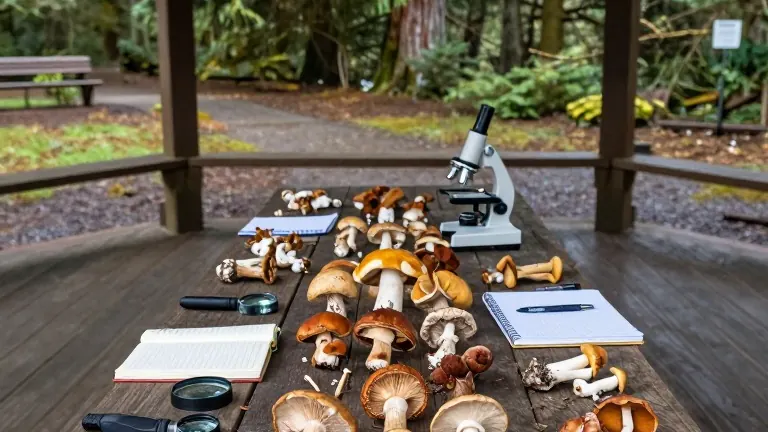
The Bellingham mushroom gathering returns this month.
Buck McAdoo works at a shed in his Bellingham backyard he calls the PNW Mushroom Lab and Herbarium. He hunches over a microscope there, checking spores from a mushroom he collected. He is not yet sure whether he has enough specimens for the upcoming show. October is normally the strongest month for fungi in Pacific Northwest forests, but a lack of rain has slowed growth. McAdoo said he will not know what he has until a few days before the show. Smaller mushrooms keep only a few days after picking, he said, which is why he notes details and photographs them where they grow.
The 34th annual Wild Mushroom Show runs Oct. 25 at Fisherman's Pavilion at Zuanich Point Park. About 20 families of mushrooms will be on display. McAdoo and roughly 300 members of the Northwest Mushroomers Association collect them. Their collecting grounds include the woods near Mount Baker, Hundred Acre Wood, and the trails above Lake Padden.
McAdoo fished for a living in Guatemala and Honduras before retiring. He once planned a book about that work. He turned instead to mushrooms, picking edibles with his grandfather around the islands of Maine as a boy. Books on mushrooms were scarce in the 1950s. Collectors now mail samples for DNA sequencing to identify new species. McAdoo has traveled to Tibet and Bhutan for fungi and logged thousands of photographs of his finds. Near home he searches the woods around Deception Pass and Berthusen Park in Lynden. He said the moss-covered sand dunes there suit rare species.
McAdoo hunts for edibles but warns against mistakes. He pointed to Death Caps growing under oak trees on the Western Washington University campus. He also knows of a landscape artist in Victoria who ate a coral pink mushroom from his own yard and died days later.
The show also covers lichens and slime molds. Bellingham resident Larry Bell has collected slime molds for three years. Under his microscope he looked for amoeba that might have hatched from spores on a patch from a Chuckanut trail. Bell, a retired physician, moved to Bellingham from Texas, where he photographed microfossils. The Pacific Northwest climate does not produce those fossils. He feeds slime mold boiled wood and oatmeal. A 2010 study showed slime mold mapping the Tokyo subway system. His wife Kathy Bell noted one species is called Dog's Vomit.
Rachel LeWitt leads the Northwest Mushroomers Association and wants more people on its forays. Last month she and others sought an edible related to lion's mane. They reached the right elevation after rain and found a large specimen on a tree within minutes, then another farther down the trail. The show opens Oct. 25 at Fisherman's Pavilion.
Source: Salish Current · original report published
More News · Bellingham news · Report a business · Got a Story?