Senate races in ten states hinge on turnout and economic anxiety
Voters in Bellingham and across Washington head to the polls Tuesday amid a national fight for control of the Senate in key states.
By Matthew Collins ·
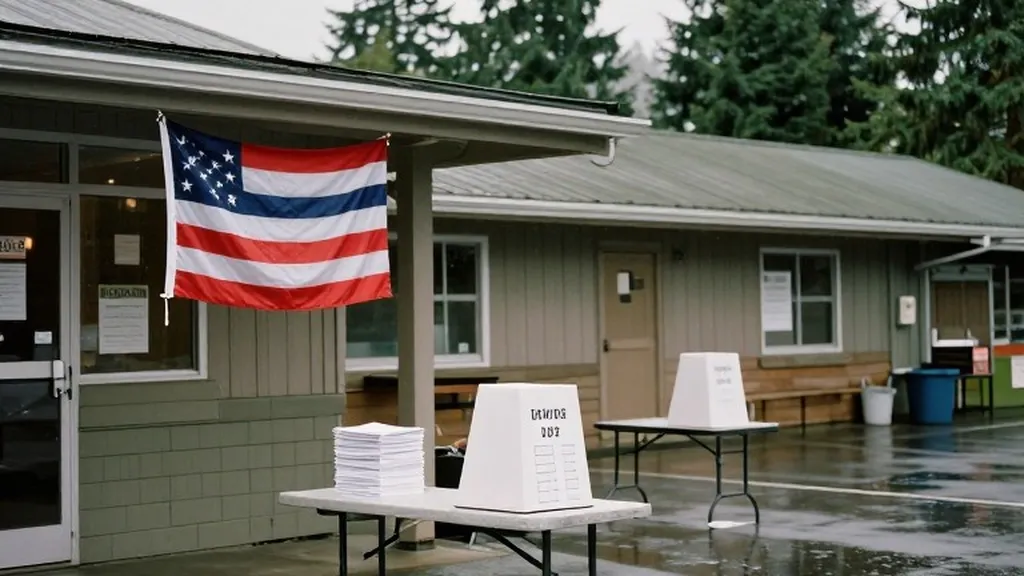
Bellingham, Washington, voters are heading to polling places today to decide who will represent the state in Congress, while the national spotlight turns to ten specific Senate races that could determine the balance of power in Washington, D.C. Washington State polls close at 8 p.m. local time, and the state conducts its elections largely by mail. In Whatcom County, residents of Bellingham, Marysville, and Lake Stevens are casting ballots for every U.S. House seat in the state, as well as state and local offices and measures. There is no U.S. Senate election in Washington this year, and no governor race is on the ballot in the state.
According to the Associated Press, the 2026 midterm election is being viewed as a referendum on President Donald Trump's second term. Voters are described as struggling with high prices and anger over an unpopular war with Iran. AP-NORC polling indicates that 35 percent of U.S. adults approve of Trump's job performance, while only 25 percent approve of his handling of the economy. Approximately seven in ten Americans say the country is heading in the wrong direction, with most blaming the president for high prices. More than 57 million people had already voted as of Monday, surpassing early voting totals from four years ago in many closely watched states.
The fight for the U.S. Senate is centered on 35 seats, including 33 regular elections and two special elections. Republicans currently hold 53 seats, while Democrats hold 45, plus two independents who caucus with Democrats. Democrats need a net gain of four seats to achieve a majority, whereas Republicans can lose only two. Eleven senators are not running again, including four Democrats and seven Republicans. The winners of these races will begin their six-year terms on January 3, 2027. Ballotpedia has identified 13 Senate races as battlegrounds, with specific attention drawn to matchups in North Carolina, Georgia, Ohio, Michigan, Texas, Maine, New Hampshire, Minnesota, Kansas, and Alaska.
In North Carolina, Democratic former Governor Roy Cooper faces former Republican National Committee chair Michael Whatley. This race is open because Senator Thom Tillis retired after clashing with Trump. The state voted for Trump by 3.3 percentage points in 2024. In Georgia, Senator Jon Ossoff is challenging Republican Representative Mike Collins. Georgia is considered a lean to likely Democratic race, having voted for Trump by just 2.2 percentage points in the last presidential election. The Associated Press notes that Republicans are bracing to lose the House and fighting to hold the Senate, with one or two seats potentially tipping the balance of either chamber.
Ohio presents a special election challenge, where Democratic former Senator Sherrod Brown is running against Republican Senator Jon Husted. Ohio voted for Trump by 11.2 percentage points in 2024. In Michigan, which is considered a toss-up to lean Democratic race, Republican former Representative Mike Rogers is competing against Democrat Abdul El-Sayed. A significant development in Michigan occurred on Sunday when El-Sayed's former primary opponent, Haley Stevens, endorsed Rogers. The state voted for Trump by only 1.4 percentage points in 2024, making it a critical target for Democrats seeking to flip control of the Senate.
Texas is another major battleground, featuring Republican Attorney General Ken Paxton against Democrat James Talarico. Trump backed Paxton over Senator John Cornyn in the primary, and the state voted for Trump by 13.6 percentage points in 2024. In Maine, a state that voted for Kamala Harris by 6.9 percentage points in 2024, Senator Susan Collins is facing Democratic former State Senate President Troy Jackson. The Associated Press reports that economic strain and tariffs have made Maine highly competitive, and all four major race ratings currently have Maine as a toss-up. The race is seen as pivotal given the state's history of electing independent or moderate representatives.
New Hampshire is holding an open Senate race following the retirement of Jeanne Shaheen. Democratic Representative Chris Pappas is running against former Republican Senator John E. Sununu. New Hampshire voted for Harris by 2.8 percentage points in 2024, making it a key state for Democrats. In Minnesota, Democratic Lieutenant Governor Peggy Flanagan and Republican Michele Tafoya, a former sports broadcaster, are among four candidates vying for the seat of retiring Senator Tina Smith. Minnesota voted for Trump by 1.4 percentage points in the last cycle, and the race is considered competitive. The outcome in these northern states will influence the broader narrative of the midterm election.
Kansas, traditionally a reliably Republican state, has become central to the fight for Senate control. The race is rated as a toss-up to lean Republican. In Alaska, the race is considered a toss-up to lean Democratic, with the Trump administration filing a lawsuit related to the certification of the Senate result. Alaska voted for Trump by 13.1 percentage points in 2024. The Associated Press notes that Trump held dozens of rallies, ending Sunday in Salina, Kansas, where he said, "I really want you to pretend I'm on the ballot." His schedule included stops in Mississippi, South Carolina, and Texas, though many Republican candidates kept their distance from the president's rallies.
The Associated Press describes the mood as one where Democrats are cautiously optimistic, while Republicans are focused on turnout. RNC Chairman Joe Gruters stated, "Everything depends on turnout. If we turn out our voters, we win, and that's what we've been planning for." DCCC Chair Representative Suzan DelBene countered, "The American people are angry. They want change." Voter sentiment in North Carolina reflects these divisions, with one librarian in Raleigh, James Moore, noting, "I'm paying more taxes. I'm paying more for my healthcare. I'm paying more for everything." In Florida, voter Mark Barker said, "I've just been following Trump the whole time. I really think he's doing an awesome job."