Israel's trust divides over Iran
The Israeli election hinges on trust, with voters deciding who to believe among leaders and institutions whose credibility has been shaken.
By Matthew Collins ·
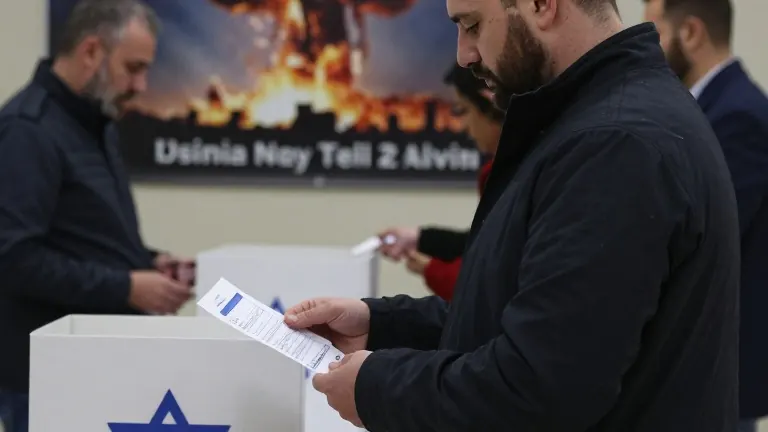
The Israeli election hinges on trust, with voters deciding who to believe among leaders and institutions whose credibility has been shaken. The issue of Iran has framed the campaign, with Prime Minister Benjamin Netanyahu presenting himself as the one leader capable of preventing an Iranian-inflicted second Holocaust. His opponents, however, argue that Netanyahu can no longer be trusted, including to distinguish between what the country needs for security and what he needs for his own political survival. The question of trust extends to the military leadership, the media reporting on it, and the voters themselves. October 7 has further complicated the issue, as the failure of the military and intelligence establishments on that day has damaged confidence in both the political leadership and the security establishment. The election will decide whether voters trust Netanyahu's experience or believe that different leaders can manage the same threats more responsibly.
The issue of trust is at the heart of the election. Voters are being asked to choose whom to believe among leaders and institutions whose credibility has been badly shaken. The competing closing arguments about Iran sharpen the choice: whose judgment do they trust, whose warnings do they credit, and whose motives do they trust? Netanyahu says the danger is too great to replace him. His opponents say it is too great to leave him in place. On Tuesday, Israelis will decide which warning they believe.
The issue of Iran has framed the campaign, with Prime Minister Benjamin Netanyahu presenting himself as the one leader capable of preventing an Iranian-inflicted second Holocaust. His opponents, however, argue that Netanyahu can no longer be trusted, including to distinguish between what the country needs for security and what he needs for his own political survival. The question of trust extends to the military leadership, the media reporting on it, and the voters themselves. October 7 has further complicated the issue, as the failure of the military and intelligence establishments on that day has damaged confidence in both the political leadership and the security establishment.
The election will decide whether voters trust Netanyahu's experience or believe that different leaders can manage the same threats more responsibly. The competing closing arguments about Iran sharpen the choice: whose judgment do they trust, whose warnings do they credit, and whose motives do they trust? Netanyahu says the danger is too great to replace him. His opponents say it is too great to leave him in place. On Tuesday, Israelis will decide which warning they believe.
Source: The Jerusalem Post