US opens talks with Myanmar junta while EU holds firm on sanctions
Washington has met with military leaders in Naypyitaw and Tokyo, seeking access to rare earth minerals and the release of a detained citizen, as European partners debate their own strategy.
By Matthew Collins ·
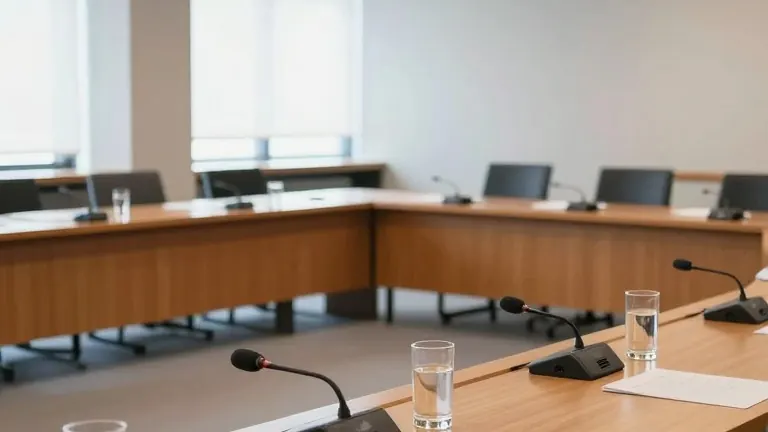
The United States has initiated a quiet diplomatic re-engagement with the military-backed government of Myanmar, marking a distinct shift from the isolationist policies favored by European partners. State Department representative Michael Vance has conducted two rounds of talks with Myanmar officials since September. These meetings took place in the capital, Naypyitaw, and later in Tokyo earlier this month.
Washington cites several specific goals for this renewed contact. The US aims to address the proliferation of online scam centers and secure the release of Adam Castillo, an American businessman currently imprisoned in the country. There is also a strategic interest in gaining access to Myanmar's rare earth resources, a market currently dominated by the US rival China.
The European Union remains committed to its policy of non-recognition regarding the military regime. Brussels continues to view the 2025 and 2026 election cycle as insufficient to legitimize the junta, particularly since military chief Min Aung Hlaing assumed the presidency. An EU spokesman stated that the bloc upholds its stance due to ongoing violence and attacks on the population.
Current EU sanctions cover 105 individuals and 22 entities linked to the military. These measures were extended for another 12 months in April. Despite the diplomatic standoff, Brussels continues to provide humanitarian aid to displaced communities and Rohingya refugees. The EU also supports civil society groups and has maintained Myanmar's preferential trade access to protect jobs in the garment industry, where most workers are young women.
Regional dynamics are shifting as Southeast Asian nations question their own isolationist approaches. Thailand's Foreign Minister Sihasak Phuangketkeow recently welcomed the US engagement and proposed substantive discussions at the upcoming ASEAN summit in Manila. Myanmar's leaders have also actively sought to break their diplomatic isolation, with Hlaing giving his first major Western interview to Time magazine in September.
European diplomats in London and Brussels have reported increased contact with Myanmar's representatives. In late October, the Burma Campaign UK noted a shift in approach after the British Foreign Office hosted a Myanmar charge d'affaires. Separately, the regime's envoy in Brussels has sought contact with European politicians, including Czech MEP Ondrej Dostal.
Experts suggest the EU faces a balancing act between maintaining credibility and avoiding marginalization. Kristina Kironska of Palacky University Olomouc argued that the US approach is transactional, focusing on specific interests like mining and cybercrime. She noted that key rare earth operations are controlled by ethnic rebels rather than the military, which may limit what negotiations can achieve.
Sabe Soe, director of the Burma Centre Prague, advised that the EU consider engaging with areas controlled by revolutionary forces rather than just the central government. She suggested tying any easing of restrictions to humanitarian access and political freedom improvements. For now, Brussels shows little appetite for a fundamental policy change, but the landscape is evolving as more governments reopen their doors to Myanmar's generals.
Source: Deutsche Welle