Washington Floats Viktor Orban for UN Secretary General Role
US officials estimate Orban could secure enough Security Council votes for a bid backed by Moscow and Beijing, though he has not yet committed to running.
By Amina Yusuf ·
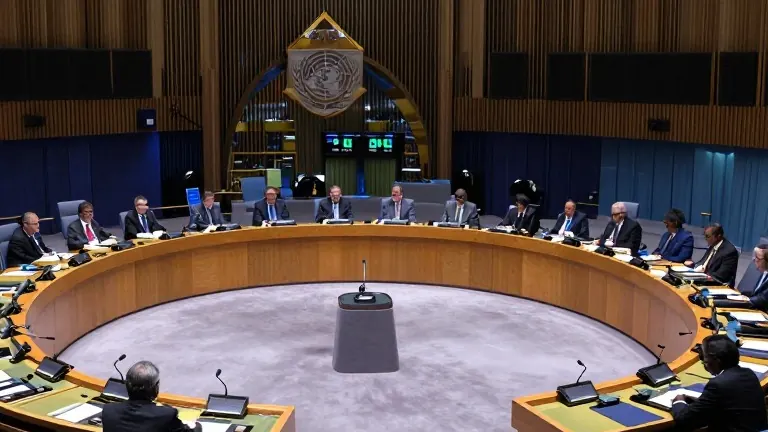
Viktor Orban is emerging as a primary candidate for the next UN secretary-general, a role currently open for selection before the end of the year. US President Donald Trump is reportedly advocating for the former Hungarian prime minister, with the White House believing that Moscow and Beijing would align with Washington to support his candidacy. This potential three-power alliance would create a joint nomination, a strategy that US and international diplomats describe as highly effective for securing the position.
The discussion regarding the next secretary-general began when US officials outlined their ideal candidate to counterparts in Russia and China. The US team described the desire for "someone like Orban." Russian and Chinese officials agreed with this profile. Following these conversations, Washington moved to approach Orban directly about entering the race. Orban has expressed interest but has not made a final decision. He has also declined to comment on the recent reports.
A US State Department official noted that the initial idea seemed unlikely. However, the official argued that Orban’s specific political background gives him a strong chance. The estimate suggests that eight of the 15 Security Council members would "easily" vote for him. The official projected that Orban could potentially reach 10 votes. These figures are based on private assessments, and no country has yet made a public commitment to back his bid.
The reaction from the United Kingdom and France is a key variable in the process. Both nations hold veto power on the Security Council. The report suggests that London and Paris might not block a candidate who has the backing of a council majority and the other three permanent members. Neither capital has announced an official stance on Orban’s potential run.
Orban’s hesitation stems from his identity as a nationalist politician. He is reportedly unwilling to announce a bid unless he is confident of winning. He views the UN leadership role through the lens of a political leader rather than a bureaucrat. An official from another country noted that the current field consists largely of diplomats and quiet operators. Orban would bring a different approach, one focused on wielding power. The US official agreed, stating that Orban has the right ideological outlook and would not be intimidated by the UN establishment.
The State Department official labeled Orban the "dream candidate for MAGA conservatives." This assessment points to his opposition to large-scale immigration and liberal nongovernmental organizations. It also references his clashes with established power centers in Hungary’s judiciary and media. In office, Orban repeatedly disagreed with the European Union while strengthening ties with China. Trump endorsed Orban in Hungary’s April elections, and Vice President JD Vance campaigned on his behalf. Sources expect both Trump and Vance to support Orban if he runs.
The push for Orban rests on private discussions and assessments. There has been no official announcement of a candidacy. The field currently includes Emirati diplomat Lana Nusseibeh, who entered the race last week. She is expected to answer questions on Tuesday. Another Security Council straw poll is scheduled for Wednesday. This informal vote is designed to gauge support as members work toward consensus on a nominee. It is unclear if Orban’s name will appear on that list, and more candidates could still enter the race.
Antonio Guterres’s term as secretary-general ends on December 31. Any announcement of Orban’s candidacy is expected to wait until after the US midterm elections. The report raised concerns that appointing Orban could turn the post into a defender of authoritarian leaders, including Russian President Vladimir Putin. His ties to Moscow and Beijing, along with his record in Hungary, would likely face close scrutiny from other member states.
Source: The Jerusalem Post